


On April 8, with less than two hours before President Trump’s deadline to destroy Iranian civilian infrastructure, the United States and Iran agreed to a two-week ceasefire. Pakistan brokered it. The agreement halted forty days of U.S. and Israeli airstrikes on Iran, secured a commitment to reopen the Strait of Hormuz, and opened a fifteen to twenty day window for negotiations toward a permanent settlement.
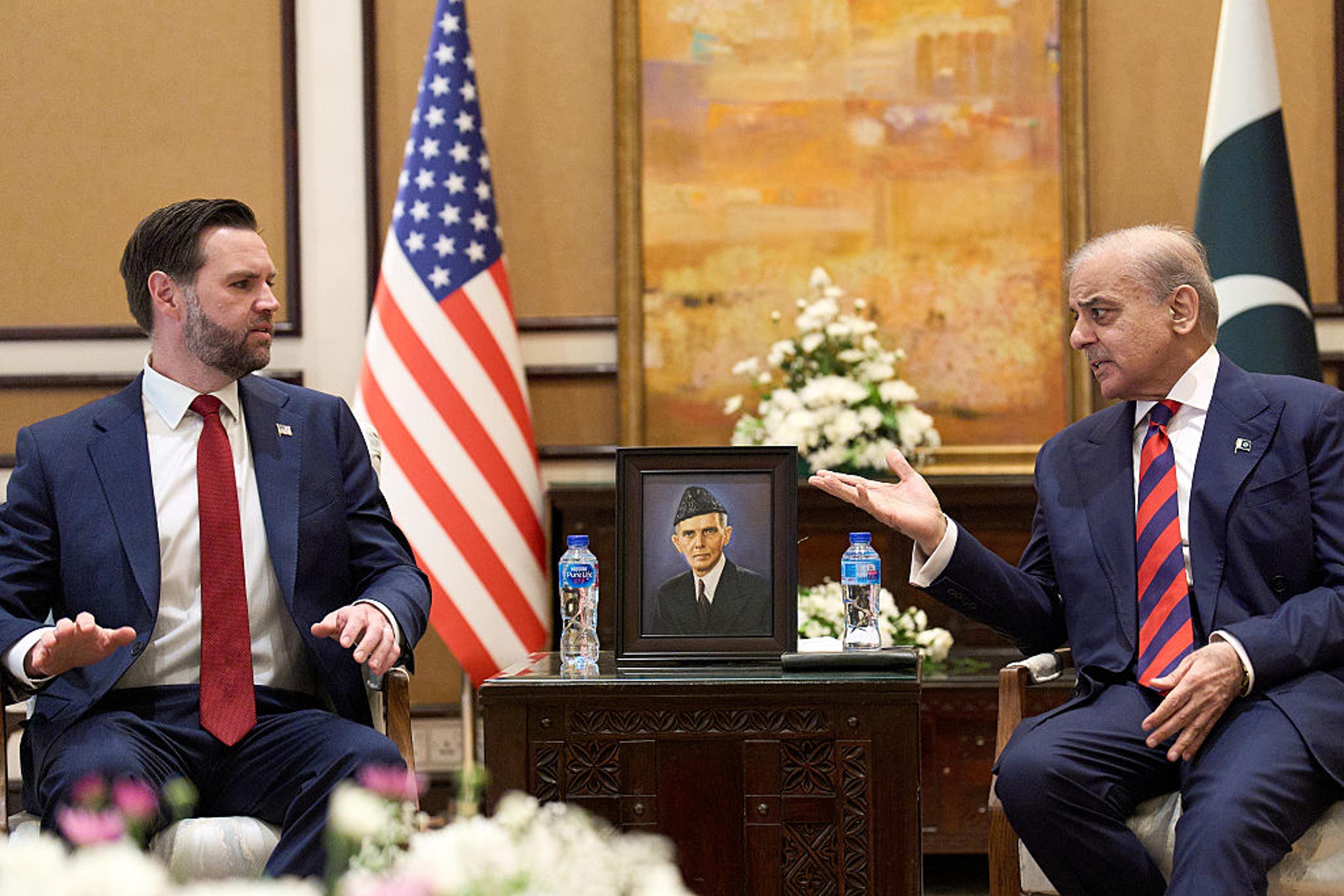
The broker was Field Marshal Asim Munir, Pakistan’s army chief and, in practical terms, its most powerful official. In Pakistan’s civil-military structure, the army chief has historically exercised more real foreign policy authority than the prime minister. Munir’s personal travel to showed serious commitment and that his country has positioned itself to be a substantive power broker. Pakistan built this position deliberately over decades, and the Saudi defense arrangement is the foundation.
The Pakistan-Saudi relationship dates to the 1960s, when Pakistani troops first deployed to protect Saudi frontiers during regional conflicts. A 1982 military agreement formalized the stationing of Pakistani troops and trainers in the Kingdom. Saudi Arabia helped fund Pakistan’s nuclear program from the early 1970s, and by the late 1990s a covert nuclear assurance arrangement was in place. The formal Strategic Mutual Defense Agreement, signed last September, codified an alliance that already existed.
During the Iran war, the exchange became concrete. Pakistan deployed fighter jets to the Kingdom and secured a $3 billion payment from Riyadh, the most recent installment in a 60-year relationship built on a straightforward exchange: Pakistani security capacity for Saudi financial support. What that history bought Pakistan was credibility in the Gulf. Both the U.S. and Iran know Paksitan had real skin in the outcome, not just a reputational interest in being seen as helpful.
The conventional image of a mediator is a neutral party with no stake in the outcome. That model has limits. A party with no stakes has no leverage, and no particular reason to be trusted by either side. The more effective model is the interested broker: a party with real relationships on both sides, enough to be trusted and enough to be useful. Qatar has operated this way for decades, maintaining ties with Hamas, the Taliban, and Western governments simultaneously. The relationships that made its mediation possible were the same ones that would have disqualified a classic neutral broker.
Pakistan in 2026 fits this model. It has a functional relationship with Iran rooted in shared regional interests (sharing a long border), a deep security relationship with the Gulf states, and enough proximity to Washington to carry messages credibly. None of those relationships is neutral, but they are all useful. Munir’s April 15 trip to Tehran came after the first round of Islamabad talks ended without a deal on April 12.
He carried a new message from Washington and worked to secure a second round before the April 22 ceasefire expiration. The effort was coordinated across Pakistan’s government: Munir in Tehran, Interior Minister Mohsin Naqvi also in the Iranian capital, Prime Minister Shehbaz Sharif conducting a four-day Gulf tour simultaneously. Trump credited Munir by name, calling him a key reason negotiations were likely to continue in Pakistan.
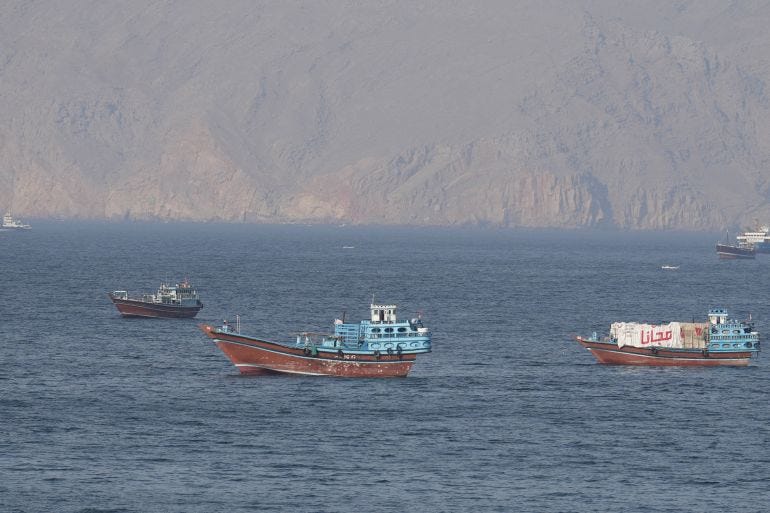
The ceasefire framework Pakistan helped produce calls for an immediate halt to hostilities, the reopening of the Strait of Hormuz, and a 15-20 day negotiating window. It remains fragile. The U.S. naval blockade on Iranian ports continued after the ceasefire took effect, and Iran threatened to close the Red Sea in response. Now, in a game of musical chair for leverage, the U.S. has imposed its own blockade on the strait, and Iran has reversed its opening of the strait on April 18th in response to the US Navy firing on an Iranian vessel last Sunday.
Despite all of this, the sides continue to talk. A framework exists for this to occur, and it exists because Pakistan had the relationships to make it possible. And now other parties are stepping to further de-risk the situation. A European coalitionis seeking to reopen Hormuz itself without the United States as part of an international mission. Given the impact of the global economy, internationalizing this aspect of the conflict is a good idea that will make a final settlement between Iran and the U.S. easier to reach.
Pakistan’s role fits a pattern that researchers at Harvard’s Belfer Center have begun examining systematically. Their Middle Powers Project identifies countries that have positioned themselves between Washington and Beijing without formally committing to either, built relationships across multiple sides, and developed the capacity to act when the great powers are deadlocked or distracted. They are not staying out of great power competition. They are inserting themselves into it on their own terms.
For Pakistan, sixty years of security guarantees and financial exchanges with Saudi Arabia produced something that couldn’t be manufactured on short notice: credibility with both sides of a conflict the great powers couldn’t resolve alone. It was the return on a long investment in regional standing, collected at exactly the right moment. Pakistan is not the only country that has made that kind of investment.
Turkey brokered the 2022 grain corridor agreement between Russia and Ukraine. Qatar facilitated the 2020 Doha Agreement with the Taliban. India has positioned itself as a voice for the developing world without taking sides in U.S.-China competition. Each built specific relationships over years and deployed them when the moment arrived. The Saudi arrangement is not charity, and Pakistan’s mediation is not altruism. Both are investments in relevance, and Pakistan just collected on them.