


Taiwan sits just over 100 miles off the Chinese coast. For decades, China’s crossing of that narrow strait has been deterred by a single assumption: that the United States would make it too costly for Beijing to try. That assumption rests on three things: visible military presence, clear red lines, and consistent behavior. The Iran war has put all three in question.
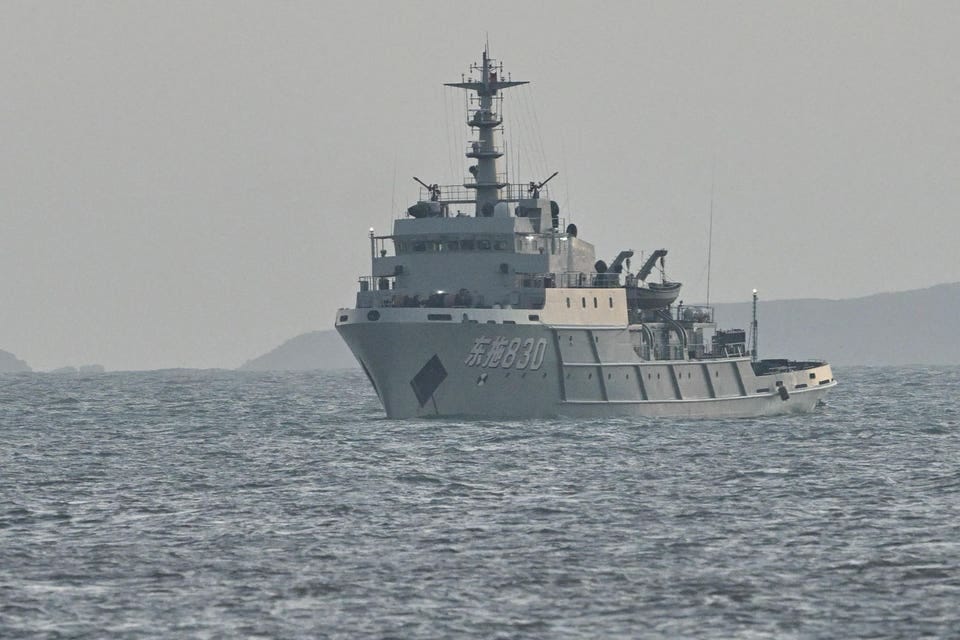
Taiwan has never built the defense it needs to stop a Chinese amphibious invasion. The island’s geography favors the defender with limited landing areas, mountainous interiors, and dense urban areas. But geography only matters if you have the weapons to exploit it. Analysts at the Center for the New American Security (CNAS) have laid out what a proper defense looks like: hundreds of thousands of autonomous drones organized across four zones spanning the strait, to impose attrition on an invasion fleet before it ever reaches the beaches. But Taiwan produces only 10,000 drones a year. It continues to spend billions on advanced systems like fighter aircraft that Chinese missiles would destroy quickly.
The U.S. commitment to intervene has filled the gap. While this policy is ambiguous by design and not binding, it has been credible enough to work. That credibility is now being eroded. Significant U.S. military assets have moved to the Middle East. A $14 billion arms package to Taiwan, containing the “asymmetric” systems the island needs most, was withheld ahead of Trump’s planned Beijing summit. The 2026 National Defense Strategy does not mention Taiwan by name. None of this was designed to signal weakness. It is the byproduct of an administration consumed by one theater while another watches. But unintended signals are still signals, and what Beijing is hearing is that it might be able to move on Taiwan and get away with it.
Trump’s approach to China is transactional, focused on trade negotiations and using an arms deal with Taiwan as a bargaining chip. When Trump said he was “talking to Xi” about the Taiwan arms package, he was describing a negotiation. Beijing received it as confirmation that it has leverage over U.S. decisions about Taiwan’s defense, which has significant implications for its military strategy. When Xi told Trump directly that Taiwan is “the most important issue” in the bilateral relationship, Trump responded by discussing trade deals. The two sides are not having the same conversation.
The pattern extends beyond individual exchanges. While Trump was occupied with Iran, Taiwan’s opposition Kuomintang leader accepted Xi’s invitation to visit Beijing in April. Taiwan’s internal politics are drifting toward accommodation as American commitment appears to wane. The NDS language reflects a genuine strategic shift: the stated goal is no longer to counter China but to avoid being dominated by it. Underlying all of it is a cruder logic that Trump has occasionally made explicit: spheres of influence were the U.S. focuses on the Western Hemisphere, and China is left to manage its own neighborhood.
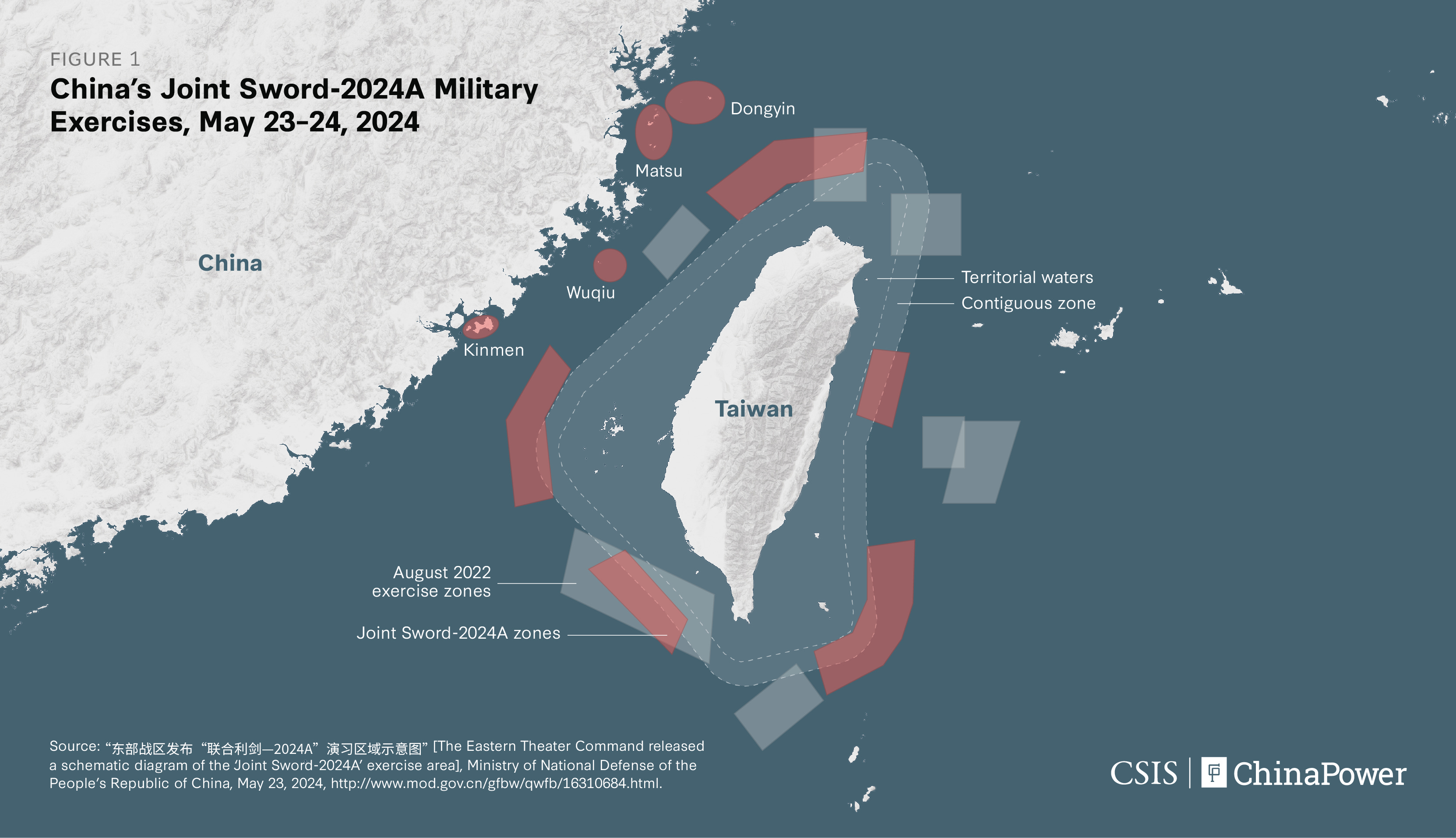
China does not need to invade Taiwan immediately to achieve its strategic objectives. A blockade or sustained “gray zone” campaign short of invasion achieves the same end without triggering a direct military response. The playbook is visible in the current military activity. On March 15, 26 Chinese military aircraft entered Taiwan’s air defense identification zone, with sixteen crossing into the northern, central, and southwestern sectors simultaneously.
Seven naval vessels were active around the island at the same time, and the outline of a potential blockade is still in place. This followed a two-week lull that coincided precisely with the lead-up to Trump’s originally planned summit in late March, since rescheduled to mid-May. China paused its air provocations as a diplomatic gesture before a summit it was preparing to host. When Trump postponed, the flights resumed.
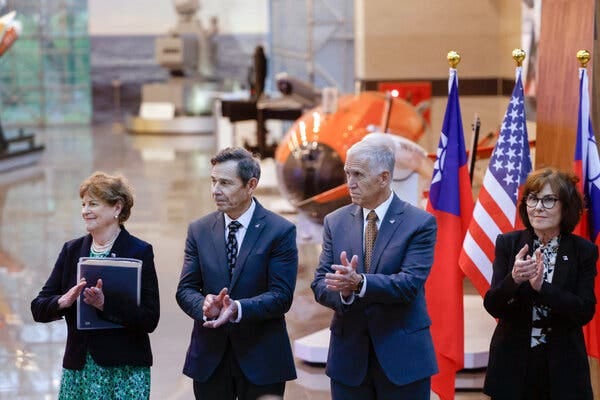
The longer-term Chinese approach is more patient than a sudden assault. A slow-walked blockade, gradually isolating Taiwan economically and logistically without triggering an acute military response, closes the noose over time until Taipei negotiates rather than fights. Taiwan produces the chips that run American AI infrastructure and defense systems. Disrupting that supply chain without firing a shot is a prize worth considerable patience. And it also facilitates the long-term Chinese goal of reunifying with the island.
Taiwan’s own defense planners have already begun adjusting to U.S. unreliability. The CNAS report states this plainly: the asymmetric drone defense it recommends “offers a meaningful hedge given growing concern that the United States might not intervene in a cross-strait conflict.” Taiwan’s military community is no longer treating U.S. intervention as a baseline assumption. That shift in planning reflects a rational reading of the signals Washington is sending, intentional or not.
Another problem is that Taiwan is not building the defense that hedge requires. It is investing in legacy platforms at the direction of a U.S. defense industry that profits from selling expensive hardware, while the drone production gap grows wider. The withheld arms package made it worse: the asymmetric systems Taiwan needs most were held back to avoid antagonizing Beijing ahead of a summit that was then postponed anyway.
The CNAS authors frame the deterrence question correctly: the issue is not whether Taiwan can defeat China in a conventional war. It cannot. The question is whether Beijing can stomach the operational chaos, staggering casualties, and strategic uncertainty of a contested amphibious crossing. That deterrent only holds if Taiwan is building it and Washington is visibly committed to supporting it. Right now, neither condition fully applies.
Deterrence does not collapse all at once. It erodes through an accumulation of signals that individually seem manageable but collectively tell a different story. Trump has said “Taiwan is Taiwan” when pressed by a reporter, but against a pattern of delayed arms sales, a changing defense strategy, a postponed summit. Beijing reads patterns, not throwaway statements in press conferences or social media. China’s military posture is active now. Taiwan’s defense gap is real now. The window is open now for China to make a move while the US is distracted once again in the Middle East.