


Last weekend, the United States and Israel launched one of the largest military operations in a generation. Airstrikes have hit nearly 2000 targets in Iran, including nuclear sites, missile facilities, military command structures, and the country's leadership. They are the opening move in what the Trump administration initially described as a campaign to dismantle Iran's military capability and topple its government.

Supreme Leader Ali Khamenei and Iran’s top military leadership was killed in the opening hours. The operation is ongoing. Iran is fighting back across the entire Middle East, targeting U.S. bases and allies from Bahrain to Jordan. Six American service members are dead. The Strait of Hormuz, through which a fifth of the world's oil flows, is closed. This is not a limited strike, but a war.
Iran’s response has been relentless and deliberately broad. Since the strikes began, Iran has launched coordinated drone and missile attacks across the Middle East, hitting civilian infrastructure, airports, ports, military facilities, and urban areas in the UAE, Bahrain, Kuwait, Qatar, Oman, Saudi Arabia, and Jordan. The scale is unlike anything the region has seen.
The UAE alone absorbed 165 ballistic missiles and 541 drones in a single day. Most were intercepted. But interception is not free. Every drone swatted out of the sky costs a defending country an interceptor missile that can run to a million dollars or more, while the incoming drone may have cost Iran a few thousand. The U.S., which has seen a consulate, embassy, and multiple military bases hit, faces the same financial calculation.
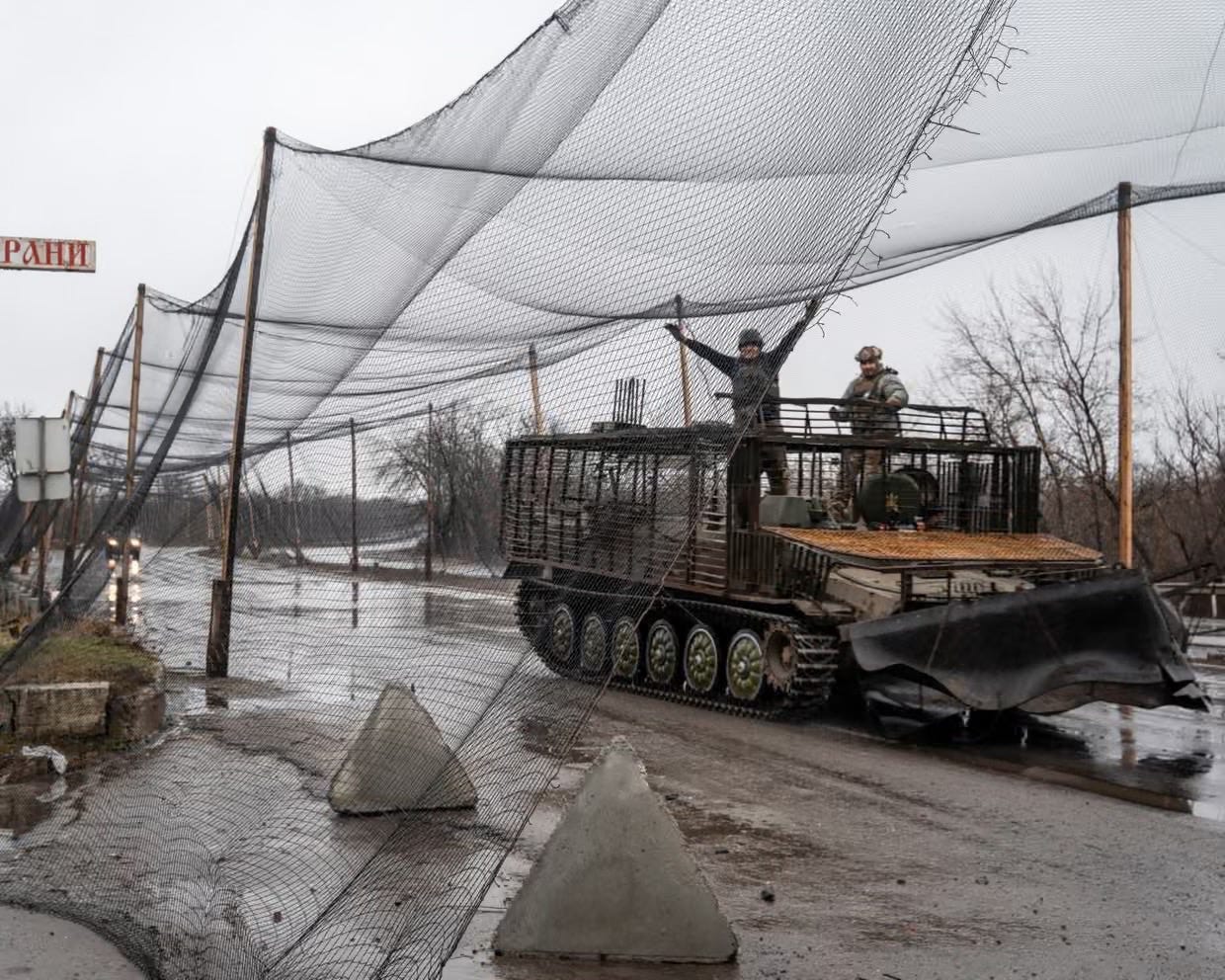
This asymmetry, cheap drones exhausting and evading expensive defenses, is one of the defining military lessons of the Ukraine-Russia war. It does not require sophisticated technology. It requires volume, and Iran has volume as the world’s largest exporter of drones for military use and Russia’s primary supplier. The question of how you defend against it, at sustainable cost, does not yet have a good answer.
The AI Battle That Ran Alongside It
Now for the extraordinary irony embedded in this week’s news. Hours before the strikes on Iran began, Trump announced that the military would no longer use Anthropic’s AI tools, and then U.S. forces used that same AI to assist the very operation launched that day.
The dispute had been building for weeks. Anthropic, maker of a widely used AI called Claude, had signed a contract with the Pentagon to integrate its technology into classified systems. The company held two firm limits beyond current US law: it did not want its AI used for fully autonomous weapons, and it did not want it used for mass surveillance of American citizens.
The Pentagon called those limits unacceptable. Anthropic said the government’s final offer included language “framed as compromise paired with legalese that would allow those safeguards to be disregarded at will.” When Anthropic refused to back down, the administration banned the company from all government work and moved to blacklist it, a designation normally reserved for foreign adversaries.
Hours later, a rival company, OpenAI, announced a deal with the Pentagon. Its CEO said the government had displayed “deep respect for safety”, invoking the same principles Anthropic had been punished for asserting. But the terms of its agreement permitted all legal uses of ChatGPT, with no additional stipulations. Sen. Mark Warner warned publicly that the episode raised serious concerns about whether national security decisions were being driven by careful analysis or political considerations, and might be a pretext to steer contracts toward a preferred vendor.
Strip away the corporate drama and the underlying question is serious. AI is now embedded in American military operations, used to assess intelligence, identify targets, and model battle scenarios. Who decides how it can be used, and what it cannot be asked to do? A private company drawing its own ethical lines is one answer, imperfect but at least visible. The administration’s response to blacklist the company and find a more compliant vendor forecloses that conversation entirely.
The Larger Contest
Pull back further and both stories, the war and the AI dispute, are expressions of the same underlying competition. Modern warfare runs on technology. Technology runs on chips. Chips run on minerals that China refines in overwhelming quantities and has already shown willingness to restrict as a geopolitical weapon.
Earlier this month, the U.S. convened ministers from 54 countries in Washington to begin building a rival supply network, an alliance committed to producing and trading the critical minerals that advanced electronics require, outside of Chinese control. The same week, India formally joined an American initiative to secure technology supply chains running from raw materials all the way through to AI systems.
The argument behind both efforts is simple: if the 20th century ran on oil and steel, the 21st century runs on compute and the minerals that feed it. For example, Brazil, sits on some of the world’s largest rare earth deposits and is now the subject of open competition between the U.S., Europe, and China. Panama seized Chinese-operated port concessions at the canal. Every move is incremental. Together they describe a concerted effort to peel away Chinese supply chain control, one node at a time.
The Iran war made vivid what is usually abstract. A supreme leader was tracked and killed using AI tools built by a California company, delivered by aircraft that depend on components sourced from across a global supply chain that the United States is now racing to secure.
The U.S. is struggling to combat another technological advance: cheap, precision-guided drones that are making advanced missile defense systems obsolete. Its the new, high-tech 21st century version of assymetric warfare, developed and battle tested in Ukraine and now deployed in another conflict against the world’s most powerful military.
The compute wars are not coming. They are already here, and this week showed what they look like when they arrive.