


The largest oil supply disruption in history is already making its impact felt on ordinary Americans. Gas prices are rising. Stock markets are down. Energy costs are feeding through to groceries, transportation, and manufacturing. The whole economy feels it even if people can’t name the cause. Consumer confidence is weakening, and the broader economic picture is deteriorating in ways that have nothing to do with any policy decision made in Washington this week.
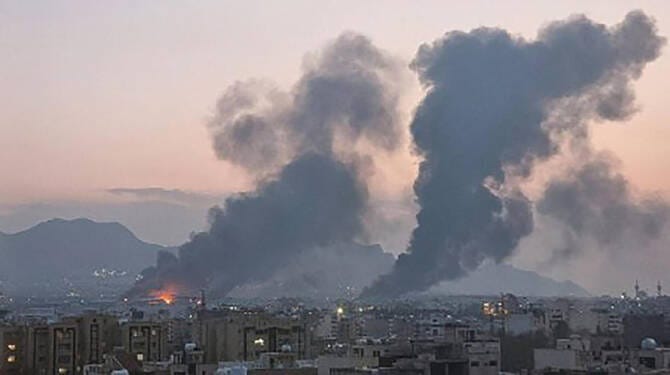
The political contradiction is already visible. The administration promised cheaper energy and a quick, clean operation against Iran. Trump ran on energy dominance, the idea that American production would insulate Americans from the volatility of foreign conflicts. That argument is being tested in real time, and the test is not going well.
The damage is not contained to the United States. Europe is facing an inflation revival at a moment when its gas storage was already dangerously low. Global stock markets are down roughly 5.5 percent since February 28. The cost of shipping and insuring cargo of all kinds is rising. Freight and shipping insurance has been canceled or repriced across the board.
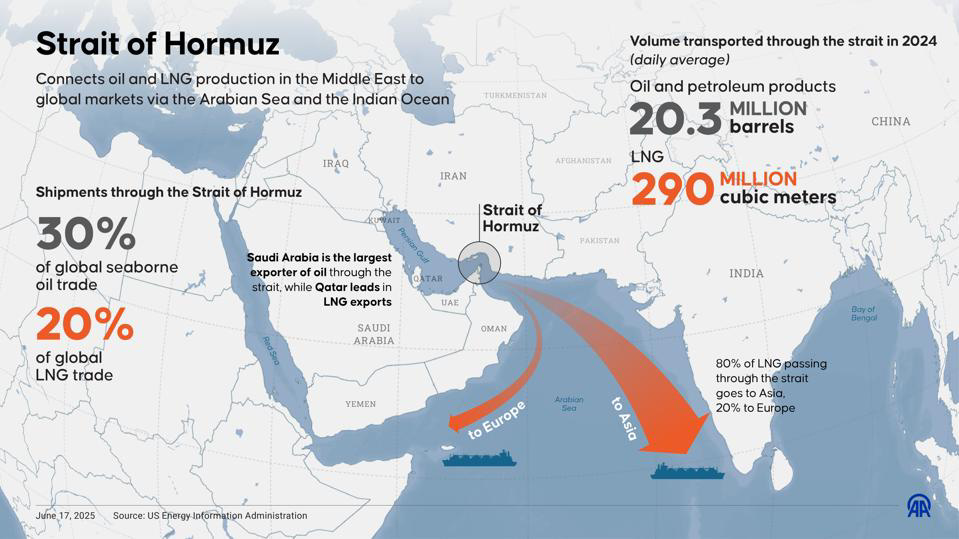
The cause is a twenty-one-mile channel between Iran and Oman.
The Strait of Hormuz is the only exit from the Persian Gulf. Two lanes of traffic carry 30 percent of the world’s seaborne oil. But oil is only the most visible thing moving through it. Gas, fertilizer inputs, and industrial chemicals all transit the same channel. Closing the strait applies pressure to the entire supply chain of the modern economy.
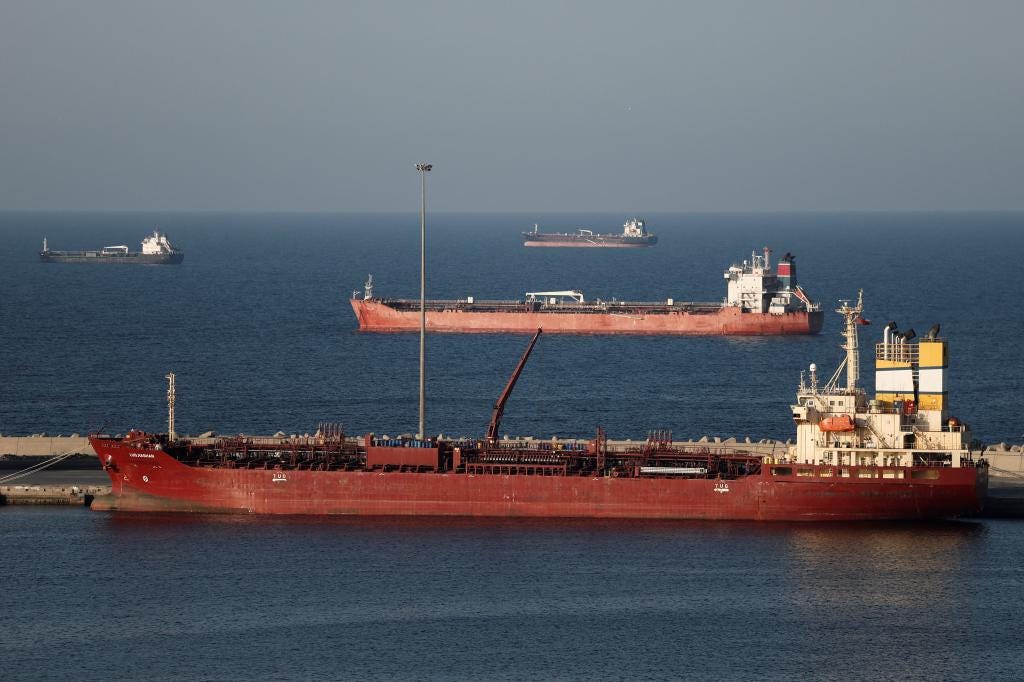
Iran didn’t close the strait by defeating the U.S. Navy. It closed it by hitting enough tankers that insurers stopped covering ships and captains stopped sailing. A few drones occasionally striking a vessel does the trick. The economics are straightforward: an incoming drone costs Iran a few thousand dollars; the interceptor missile that destroys it costs a defending country a million or more. Iran doesn’t need to win that exchange every time. It needs to make the risk calculation go the wrong way for everyone trying to move cargo.
Bypass routes exist on paper. Iran has hit those too. Oman’s alternate deep-water ports have been struck by drones. The UAE’s Fujairah terminal, the main alternate export route that bypasses Hormuz, has been hit three times. There is no pipeline across Arabia that comes close to replacing the volume normally transiting the strait. Without active naval escorts, ground-based anti-drone defense, and a sustained willingness to absorb casualties, there is no way to fully reopen it without Iranian cooperation.
Oil prices surged from $72 a barrel before the war to $110, with some analysts projecting $150 if the conflict drags on. The U.S. produces a lot of its own oil, but oil is priced on a global market. American pump prices rise when Brent crude rises, regardless of how much the U.S. drills. Higher energy costs are inflationary across the entire economy. The Fed was expected to cut rates this year, but that is now off the table. Higher prices will incentivize more U.S. production, but that takes time, and producers will hedge their bets.
Gas markets are getting hit from three directions at once. LNG tankers cannot move through the Strait of Hormuz. Iranian pipeline gas to Turkey and Iraq is under threat. And strikes have disrupted major Gulf gas fields. Together, one-fifth of the world’s LNG supply has been knocked off the market. There is no spare capacity sitting somewhere waiting to fill the gap. Like oil, because gas trades on a global market, no country fully escapes the economic impact.
More than 80 percent of the oil and gas moving through the strait goes to Asia, not the West. Japan gets 90 percent of its crude from this source, and its government has activated emergency response measures. South Korea gets 70 percent of its crude through the same channel and has already deployed a $68 billion stabilization fund to cushion the blow. China has large strategic reserves and can absorb a short disruption, but a prolonged one threatens its growth and the competitiveness of its manufacturers. India has thinner reserves and is already feeling the pressure.
As a major LNG exporter, the United States is in the unusual position of benefiting from higher prices even as it caused the disruption. American producers are locking in elevated prices for years ahead. The countries bearing the most economic pain from this war are precisely the ones being asked to send warships to help resolve it. Their reluctance is not hard to explain. They did not choose this war, but they are paying for it anyway.
The fertilizer shock few are talking about, and it may prove the most lasting. The Gulf ships enormous quantities of ammonia, urea, and sulfur, the building blocks of the nitrogen fertilizer that grows most of the world’s food. Because fertilizer is manufactured using natural gas, the gas disruption is simultaneously hitting fertilizer production in other parts of the world. The price of ammonia is up roughly 30 percent. Unlike oil prices, the economic impact will not be felt immediately, but in food prices months from now.
Financial markets have mostly assumed this war ends the way last June’s twelve-day conflict did, quickly and with limited damage. That assumption is what’s keeping oil prices from being even higher than they already are. If the war drags on, or if Iran continues striking major oil and gas infrastructure in the Gulf, what is currently a painful disruption becomes an ongoing crisis with no quick fix.
Every major oil shock in modern history eventually forced a lasting response, countries diversified supply, and reduced dependence on single chokepoints. This crisis may push Asia and Europe to do the same. But structural adjustment takes years. The damage being done now is real, and its being felt by countries that did not choose to fight this war.