


When Iranian forces closed the Strait of Hormuz in March 2026, the disruption was immediate. Roughly 20% of global oil supply and 19% of global LNG trade stopped moving. The International Energy Agency called it the largest oil supply disruption in history. By early April, shipments through the strait had fallen to 3.8 million barrels per day, down from over 20 million before the war.
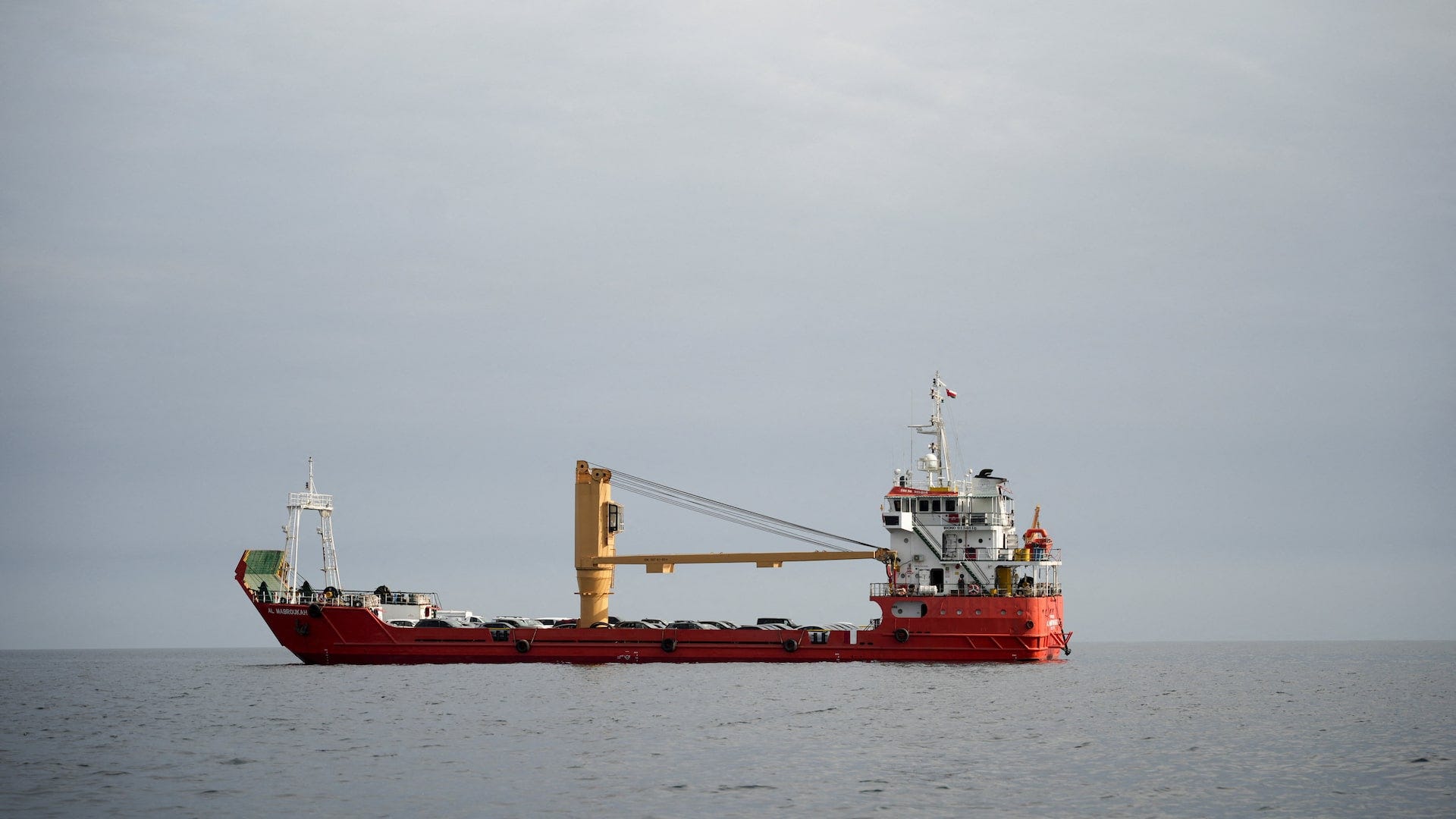
The structural weakness was not new. Saudi Arabia and the UAE were the only Gulf exporters with pipeline capacity to bypass the closure. Kuwait, Iraq, Qatar, and Bahrain had no alternative route. When the passage closed, their exports stopped with it. Iran demonstrated exactly how to weaponize a trade chokepoint, and now every country is searching for them, be they financial, technological, or geographical.
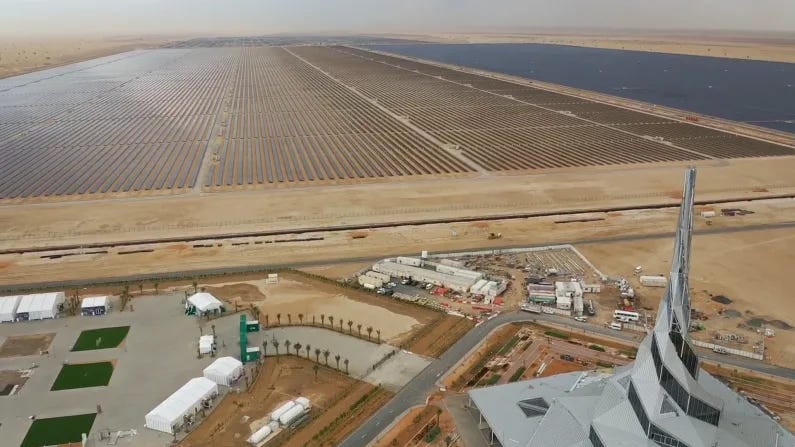
IEA Executive Director stated that one expected response to the crisis would be an acceleration of renewables, citing their value as domestic energy sources insulated from this kind of supply shock. That framing has become mainstream. The case for transitioning away from fossil fuels is now made as often in the language of security and economics as in the language of climate. Global fossil fuel power generation fell after the closure partially due to growth in solar and wind.
The transition was already underway. Renewables accounted for 85.6% of all new global energy capacity installed in 2025 and now make up 49.4% (nearly half) of global energy capacity. Global clean energy investment reached $2.2 trillion in 2025, double fossil fuel investment. Solar alone met three-fourths of last year’s demand growth and is now growing 18 times faster than natural gas.
Spain offers the clearest near-term evidence of what the shift produces. Wholesale electricity prices ran 32% below the EU average in the first half of 2025, a gap analysts attributed directly to solar and wind displacing gas generation. After the war began, Spain registered among the lowest gas prices in the EU. The economic case and the security case now point in the same direction.
But, supply chains for these energy sources have their own chokepoints. Solar panels, wind turbines, and batteries are manufactured from specific minerals, and those minerals and the industrial capacity to process them are not distributed evenly. China is the dominant refiner for 19 of 20 minerals in the IEA’s 2025 Global Critical Minerals Outlook, at an average market share of roughly 70%. There is currently no heavy rare-earth separation capacity in the United States at meaningful scale.
The distinction between mining and refining is where the constraint sits. Australia leads global lithium extraction. Congo produces most of the world’s cobalt. The United States leads in quartz, the ore from which silicon is derived. But raw ore cannot become a battery or a magnet without processing. China built that refining capacity at scale over decades.
China has also demonstrated willingness to use this position as leverage, with export controls escalating from gallium and germanium in 2023, key for semiconductors, to rare earths critical to magnets and defense applications last year. The IEA draws a useful contrast between oil security and mineral security. An oil supply disruption hits every gasoline driver immediately. A mineral supply disruption affects only the manufacture of new solar installations or EVs. Existing deployed infrastructure keeps running.
But oil is consumed entirely. Every barrel burned requires a new one. Minerals are components of physical infrastructure that are recyclable. The intensity of mineral demand for the transition is also front-loaded. It peaks during deployment. Once a solar panel or wind turbine is installed, it produces energy for decades without consuming additional minerals. Recycling is not yet mature enough to close the supply gap on its own, but the trajectory is established.
The World Resources Institute projects recycling could reduce new mine development needs by 40% for copper and cobalt by 2050. Both dependencies share recognizable features: concentration in a small number of points, long lead times to build alternatives, and a demonstrated willingness by controlling parties to restrict access under geopolitical pressure. The war made fossil fuel vulnerability impossible to ignore.
Mineral vulnerability remains somewhat abstract, for now. Oil dependency is permanent and recurring. Mineral dependency is front-loaded and diminishes as recycling scales; it is a problem with a ceiling. The transition does not eliminate strategic exposure. It relocates it upstream, into supply chains that are no less concentrated than the ones being left behind but with constraints that are more manageable. That does not make it one policymakers can afford to ignore.