


In the long-gone world of 2009, now seventeen years behind us (back when the Black Eyed Peas and Lady Gaga ruled the Billboard charts), my history professor paused mid-lecture and offered a line that cut through the abstractions of the Cold War. Two diplomats from opposing countries are arguing. One says, “I have enough nuclear weapons to destroy the world three times.” The other replies, “Well, I have enough to kill you once.”
Nuclear doctrine can get more complex than you might think. There is first strike capability, which is just the brute force capability to launch an attack. There is also what is known as “damage limitation”, or how you withstand damage and retain the ability retaliate after a first strike. And then there is second strike capability, or the ability to retaliate effectively.
The idea of MAD, or mutual assured destruction, fits within the second strike capability. If a first strike comes your way, can you retaliate with enough force that the first strike results in your adversary’s own destruction? If you can make first strikes as costly as possible, beyond any reasonable benefit, than first strikes are no longer an option, and you’ve mostly prevented nuclear war.
What could undermine MAD? Two things: not having enough weapons ready to go, and not being able to withstand a first strike. This is part of the logic of the nuclear triad, or having nuclear weapons delivered through land, sea and air. It increases survivability of nuclear forces and provides more options for the second strike.
Back to the old quote though: at a certain point, adding more weapons becomes absurd IF you already have the capability of destroying your opponent. There is no reason to have enough to destroy the world once, much less three times over. Once you can guarantee the destruction of your adversary, any addition to a nuclear arsenal is pointless. Assured destruction is a threshold concept. Cross it, and the logic changes. The difference between annihilating your opponent once and annihilating them several times does not alter the outcome from a strategic standpoint. It just has the minor drawback of potentially destroying the Earth’s climate.
The New START treaty, which just expired, is about this exact dynamic, one that involves the survival of the human race and is therefore above any other diplomatic or military objective. I would oppose working with Russia on most diplomatic initiatives while it continues to act as a rogue state EXCEPT for this one.
For decades, the superpowers accumulated weapons as if that distinction mattered. Early in the Cold War, some of it did. Missiles were inaccurate and intelligence was uncertain. Leaders feared a disarming first strike and sought to build in redundancy as insurance for an unreliable technology.
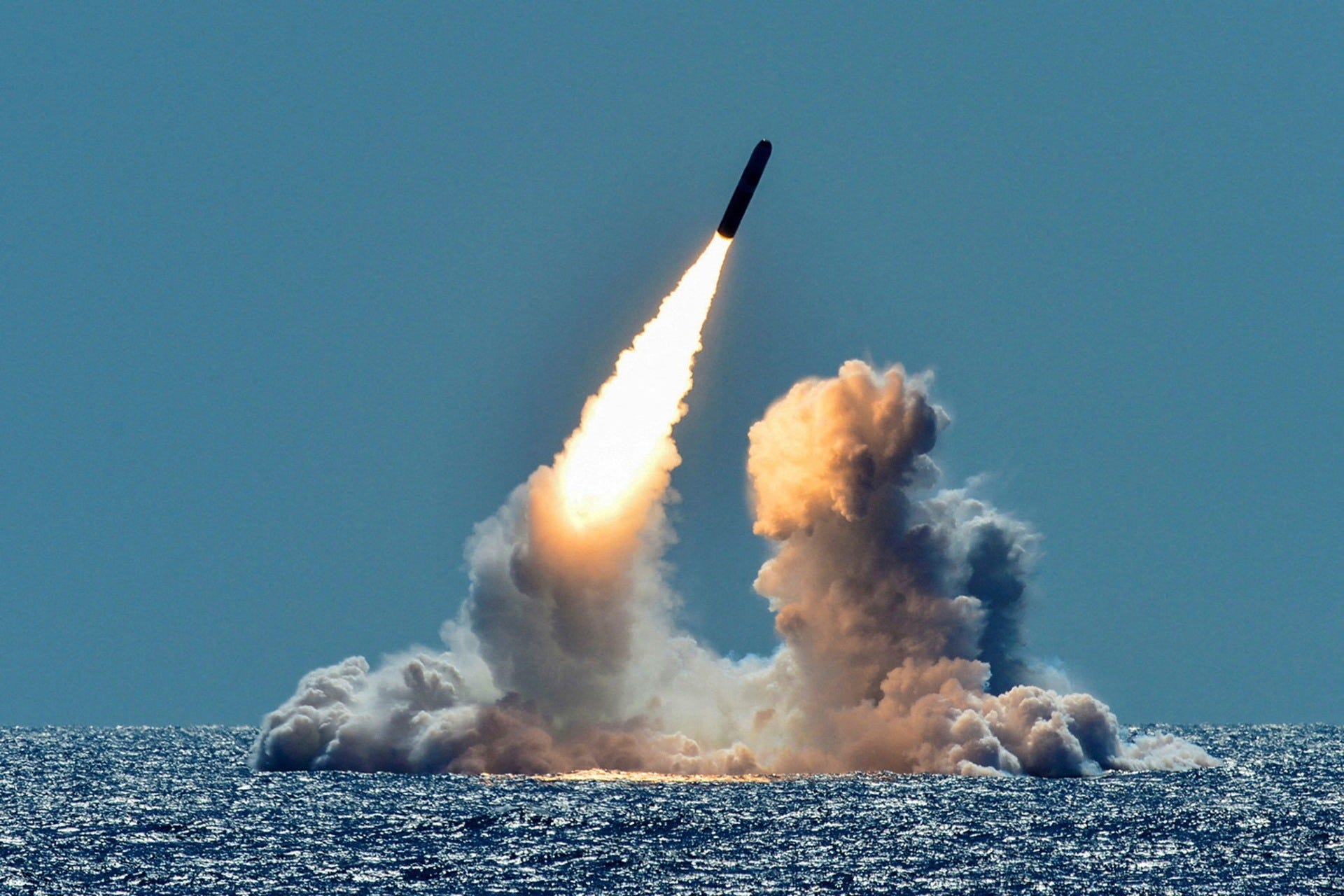
But by the late Cold War, survivable second-strike forces were secure. Ballistic missile submarines ensured retaliation even after a massive surprise attack. Hardened silos and dispersed bombers added resilience. Arms control emerged to manage this new reality. It did not eliminate nuclear weapons or remove existential risk, but it imposed limits. It slowed accumulation and introduced transparency. It acknowledged, without saying so directly, that there was such a thing as “enough.”
That structure has now ended.
On February 5, 2026, New START expired. It was the last remaining bilateral treaty placing legally binding limits on the strategic nuclear forces of the United States and Russia. Its single extension had already been exercised in 2021. No successor agreement was concluded. For the first time since the early 1970s, there are no binding caps on the long-range nuclear arsenals of the world’s two largest nuclear powers.
New START was never disarmament. It capped deployed strategic warheads at 1,550. It limited deployed delivery systems to 700 and total launchers to 800. Those ceilings were comfortably above any plausible minimum deterrent requirement. Both sides retained secure second-strike capabilities under the treaty. Equally important were the shared definitions of what counted as a deployed warhead. The treaty required on-site inspections data exchanges that reduced uncertainty.
Washington and Moscow have signaled that they may voluntarily observe the previous limits through 2026, but this restraint is informal and reversible. The immediate result is not to resume the arms race. Modernization programs already underway in both countries are expensive and slow-moving. The United States is replacing its aging Minuteman III missiles with the Sentinel system. Russia is fielding the Sarmat intercontinental ballistic missile. These efforts absorb resources simply to maintain existing capabilities.
The deeper change is structural. Under New START, both sides operated within a shared ceiling. Force planning occurred inside a defined box. Without that box, planning becomes unilateral. The question “how much is enough?” no longer has a mutually accepted answer. It is replaced by “how much might the other side build?.” Relative advantage is psychologically easier to justify than sufficiency. If missile defenses expand, additional offensive systems can be framed as necessary insurance. If a rival’s arsenal grows, symmetrical responses appear prudent. Hedging against worst-case scenarios becomes the organizing principle.
None of this alters the core deterrence equation. Second-strike survivability for both the United States and Russia is already secure. Submarine-based forces ensure retaliation cannot be eliminated by a first strike. Additional warheads do not make that retaliation more credible once assured destruction is guaranteed. The difference between destroying a society once and destroying it several times over does not provide a meaningful strategic gain.
New START did not prevent competition. It contained its most visible expression. It was the last formal acknowledgment that surplus exists. Its expiration removes the shared, legal acceptance of sufficiency. Deterrence remains intact, and neither side doubts the catastrophic consequences of nuclear use. What has changed is the willingness to formally stop counting.