


For most of the past century, the organizing question of global politics was straightforward: what are the great powers doing, and what do they want. The Cold War was a simple case of two poles: the United States and the Soviet Union.
In the post-Cold War era, the United States was clearly the most dominant power, with Russia maintaining residual influence but no longer a peer competitor. For thirty years, American primacy was the fixed assumption around which everything else was arranged.
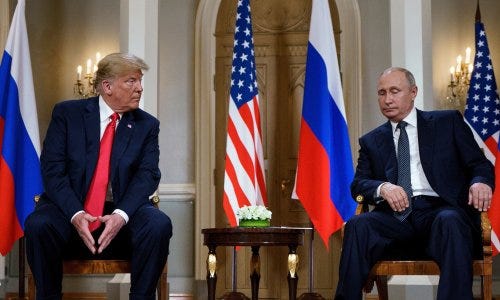
That assumption no longer holds. The period from 2022 to 2026 has produced something neither era anticipated: both original poles simultaneously demonstrating that raw military power no longer converts reliably into political outcomes. Multipolarity is not a forecast. It is the condition that has already arrived.
Charles Krauthammer seemed to have nailed it. In his 1990 essay “The Unipolar Moment,” he described a world dominated by a sole American superpower that would inevitably diminish after a generation, or 30-40 years. We are right on time.
Russia Hits a Hard Ceiling
Russia invaded Ukraine expecting a short war. In 2025, Russian forces gained less than one percent of Ukrainian territory while absorbing hundreds of thousands of casualties. In April 2026, Russia suffered its first net territorial loss over a month-long period since 2023. The daily rate of Russian advance has fallen by two-thirds compared to the same period a year ago. Ukraine is not yet winning, but Russia is no longer advancing and is being marginally pushed back in some areas.
The war has exposed Russia’s ceiling. It remains stronger than any individual neighbor but cannot subjugate even the most vulnerable of them. The costs are compounding. Russian inflation is running at 7.5 percent. Labor shortages are acute after years of mobilization and emigration and casualties that are reshaping its demographics. The defense budget consumes an unsustainable share of a $2.2 trillion economy, smaller than the state of Texas.
The EU has no unified command and no history of projecting force as a bloc. What it has is an economy roughly nine times the size of Russia’s, defense spending that rose fourteen percent in 2025 alone, and the capacity to sustain sanctions and material support for Ukraine indefinitely. Russia is losing a resource contest against an economic bloc it cannot outlast. That asymmetry defines what Russia has become: a power capable of destruction within its neighborhood, incapable of the sustained dominance.
The United States: A Diminished Superpower
The U.S. deployed overwhelming force against Iran, struck its military infrastructure, and removed its political and military leadership. It demonstrated that American military reach remains without peer. The outcome did not match the display of force. Iran declared the Strait of Hormuz open, then reversed course within twenty-four hours when the U.S. refused to end its blockade.
The IRGC and civilian negotiators are openly at odds, signaling that Tehran has not resolved internally what it is willing to concede. Iran sees no compelling reason to capitulate: its regime survived, its asymmetric tools remain intact, and the ceasefire gives it time. The U.S., having burned through a significant share of its precision strike inventory, is not eager to escalate to the level that would change that calculus. The result is a negotiation in which the US does not have leverage to impose concessions and is not willing to expend the resources to increase that leverage.
The U.S. remains the only power capable of projecting decisive force into any theater on earth. What Iran revealed is that capability and freedom of action are no longer the same thing. Washington can strike almost anything. Doing so in a secondary theater depletes what it needs for the theater that defines its strategic future: the Pacific. The 2026 National Defense Strategy is explicit on the priority order: homeland defense, then China deterrence. Military intervention in the Middle East was much further down the list.
The Shared Condition
Military superiority no longer guarantees political control. Russia could not break Ukrainian will. The U.S. could not convert Iranian military defeat into durable political outcomes. In both cases the defending party absorbed punishment and remained functional. This reflects a world with more capable mid-tier states, more accessible asymmetric tools, and more actors willing to absorb costs rather than capitulate.
The evidence is not only on the battlefield. Pakistan brokered the ceasefire between the U.S. and Iran. A Europe-led coalition prepared to reopen the Strait of Hormuz. These are not peripheral players waiting for instructions from Washington or Moscow. The actors operating in the space the old powers once monopolized are not waiting for permission.
While both Cold War powers spent the last several years burning through stockpiles, prestige, and political capital, one major power made no impulsive moves, initiated no destructive interventions, and emerged from the period stronger than it entered.
The multipolar era does not require a new superpower to replace the old ones. It only requires that the old ones lose enough latitude that the space between them becomes genuinely contested. That space is now open.