


For most of the past two decades, nuclear energy occupied an awkward place in the global energy debate. It was too expensive, too slow to build, and too politically charged to attract serious investment outside a handful of countries. That calculation has changed, and the reason is artificial intelligence.
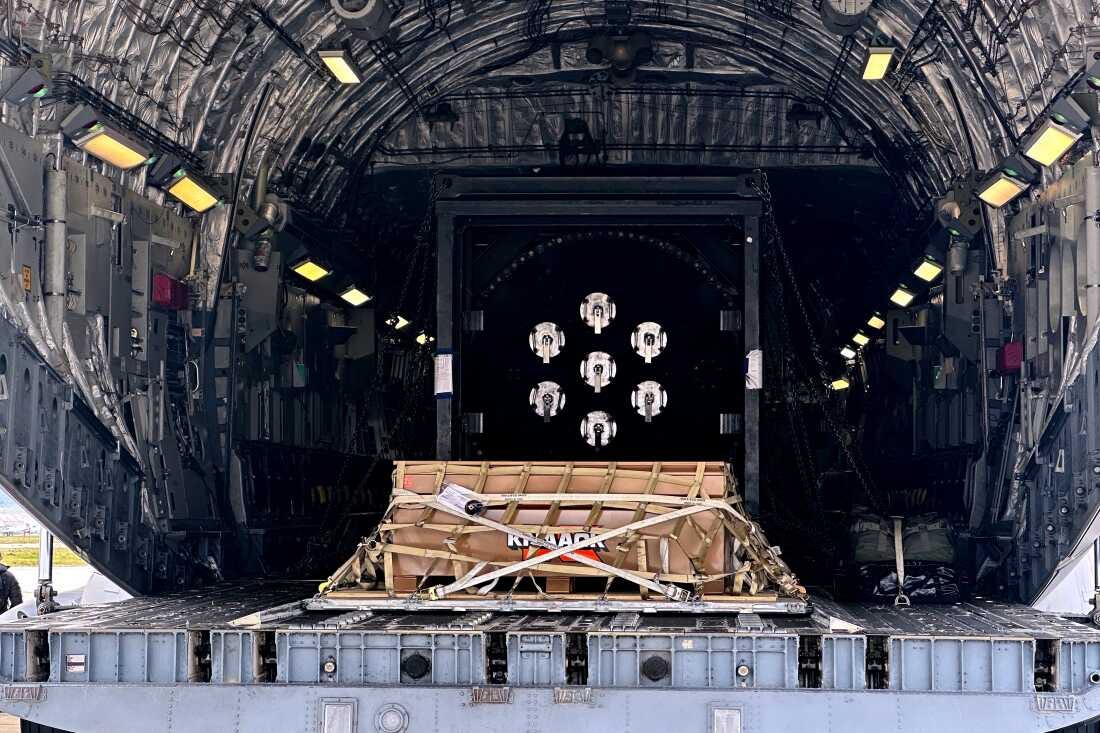
Global data center electricity consumption is projected to hit 1,100 terawatt-hours in 2026, the equivalent of Japan’s entire national energy consumption. AI requires continuous, reliable power. The answer converging across governments and technology companies is nuclear power from small modular reactors (SMRs). SMRs can be factory-built, shipped to site, and scaled incrementally. They do not require the decades of planning and billions in upfront capital of conventional nuclear plants. They can be sited near existing infrastructure and tailored to the power requirements of a data center campus or a regional grid.
A reactor export is not a purely commercial transaction. It is a 100-year relationship. Whoever builds a country’s reactor also sets its technical standards, supplies its fuel, and maintains its systems through the life of the plant. That relationship creates a structural dependency that no trade agreement can replicate. It also carries a complication that no other technology export does. Enriching uranium to fuel a nuclear reactor and to build a nuclear weapon use the same basic process. Every country that acquires civilian nuclear capability acquires proximity to weapons capability. That is why who builds your reactor, and under what terms, carries consequences far beyond the energy sector.
Russia and China understood all this before the United States did. Rosatom, Russia’s state nuclear corporation, has nineteen reactors under active construction in seven countries and projects worth over $200 billion spread across forty. Its model is straightforward: state financing, turnkey construction, long-term fuel contracts, and repayment on favorable terms. The client does not just buy a reactor. It buys a dependency.
China is building a third of all reactors under construction globally and is targeting thirty reactor exports by 2030 through the Belt and Road Initiative. Pakistan, Egypt, Argentina, and Kazakhstan are among the partner countries. Russia built Kazakhstan’s first nuclear plant, and as Rosatom’s capacity weakens under Western sanctions, China is stepping in to build the second and third. Neither country attaches nonproliferation conditions to its reactor exports. Countries that accept their technology accept their terms, or the absence of them.
The United States is now competing, and the AI boom has given that competition a commercial urgency that climate policy never provided. The American approach differs from the Russian and Chinese models in one important respect. The U.S. conditions nuclear technology transfers on nonproliferation commitments. Allies get access to American reactor technology, and in exchange they agree not to pursue weapons capability. That is the direct answer to the core tension in nuclear exports, and it is a condition Russia and China do not impose.
The partnerships being built reflect energy and foreign policy imperatives. The U.S. and Japan recently announced a $40 billion SMR partnership, with reactors being built in Tennessee and Alabama using technology developed by GE and Hitachi. Japan has almost no domestic energy resources, so locking in American nuclear technology means locking in the strategic relationship on terms that benefit both sides. South Korean engineering firms with deep nuclear construction experience are now embedded in multiple U.S. SMR projects.
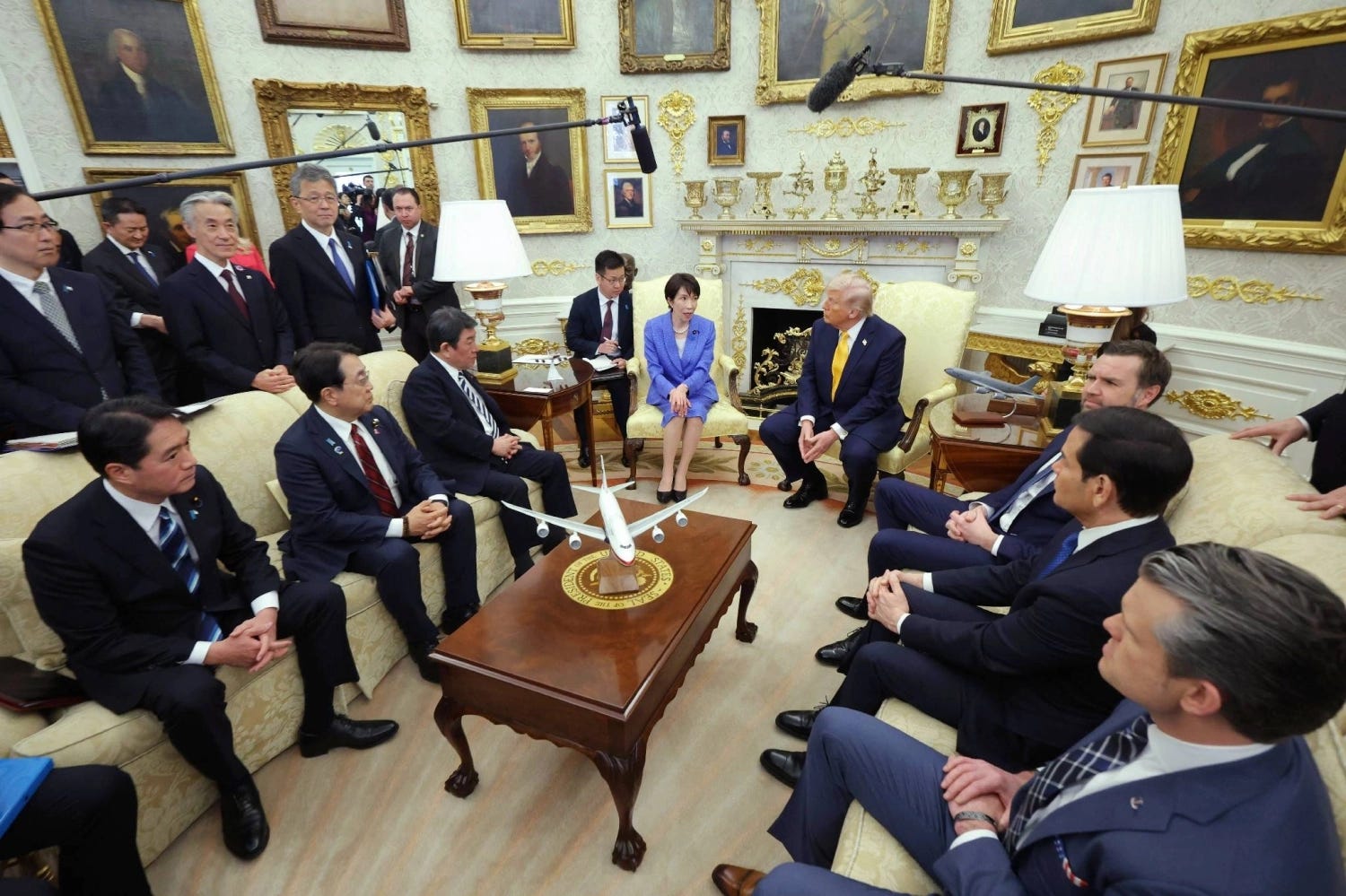
Poland, offered cheaper financing from China, chose American and South Korean reactor technology instead. That choice reflects foreign policy priorities more than economic calculation. France is committing nuclear power to anchor a major AI hub and is co-developing reactor technology with India and the UAE. The U.S. is also investing in domestic uranium enrichment capacity to reduce allied dependence on Russian fuel supply. Supplying the fuel is just as important as building the reactor
The stakes are significant. A nation running American-designed reactors on American-enriched fuel is aligned with Washington in ways that no diplomatic agreement can match because the dependency is physical rather than political. The inverse is already visible. Turkey is running a Rosatom plant that will eventually supply 10 percent of its electricity, and that will shape Turkish foreign policy for decades regardless of what Ankara’s leadership prefers.
The AI angle sharpens everything further. Nations that lock in reliable power for their AI infrastructure now will have an advantage in the future. The reactor that powers the data center also powers the alliance. The emerging Western free trade bloc taking shape among the EU, Australia, Canada, and South America, formed partly in response to energy supply chain vulnerability, represents a natural market for U.S. reactor technology, and nuclear diplomacy and trade diplomacy are beginning to converge. Future U.S. presidents would be smart to exploit this.
The proliferation risk does not disappear under American partnerships. It is managed through binding commitments that Russian and Chinese exports do not require. The United States is not simply selling reactors. It is exporting a framework for how civilian nuclear power gets developed, governed, and constrained. Whether enough countries choose that framework over cheaper alternatives will do as much to shape the next century as any military alliance or trade agreement.