


China has spent decades quietly building control over the minerals and manufacturing processes the modern global economy depends on. Every major nation is now grappling with what that dependency costs when Beijing decides to use it as leverage. The 2026 oil crisis precipitated by Iran blocking the Strait of Hormuz accelerated a response that was already forming.
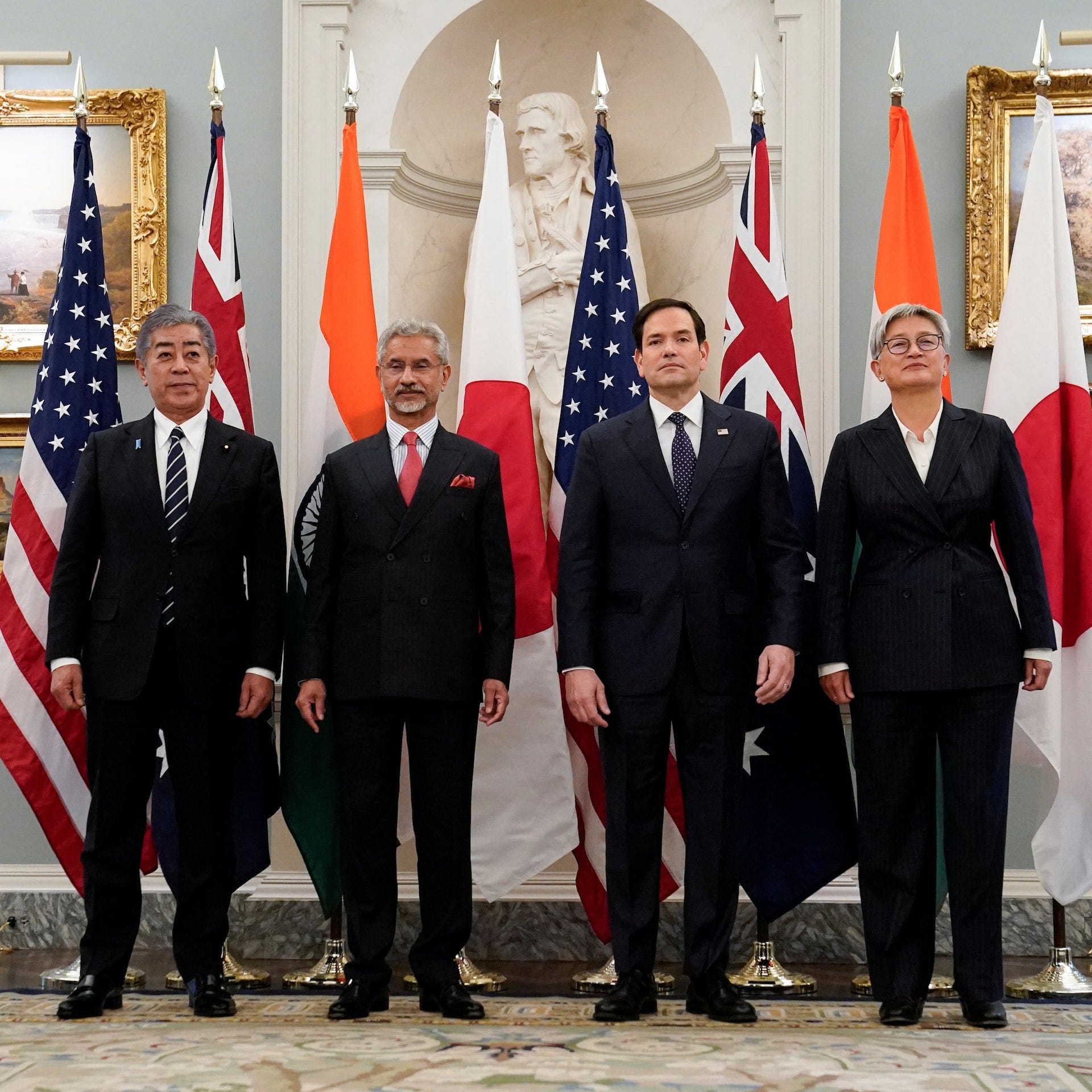
The Quad, a diplomatic grouping that includes the United States, Australia, India, and Japan, is moving from strategic dialogue to concrete investment, building a coalition around shared economic interest rather than ideological alignment. This is a different kind of alliance logic than the one that defined the post-Cold War era, and it may be more durable precisely because no one is being asked to pay a cost without getting something concrete in return.
The New Resource War Is Not About Oil
The supply chains powering the modern global economy for things like power grids, AI data centers, and electric vehicles depend on a narrow set of critical minerals: lithium, cobalt, nickel, rare earths, and specialty metals. China controls the processing and manufacturing of most of them. This dominance is the product of two decades of deliberate state-subsidized policy, not geographic luck. The United States has comparable reserves and at one point was the world’s largest producer of these minerals. This has produced a dependency more pervasive than the oil dependency that has shaped foreign policy for the last century.
The resulting dependency is similar to oil in scope. The inputs China controls are embedded in nearly every sector of the modern economy, from the power grid to semiconductor fabrication to the batteries in military hardware. Similarly, petroleum is embedded in just about every product we use daily. A disruption in rare earth supply does not just raise energy prices. It stalls manufacturing across multiple industries simultaneously.
China has already demonstrated it will use that position as leverage. When diplomatic tensions with Japan escalated in 2021, Beijing halted rare earth shipments to Tokyo. More recently, it has curbed mineral exports as trade disputes with the United States continue. Supply chain control is a weapon, and Beijing has shown it will deploy it.
The Hormuz Shock Made the Abstract Concrete
The 2026 Hormuz crisis did not create the supply chain problem, but it highlighted the problem and created urgency around addressing it. When Iran closed the Strait of Hormuz, roughly 20% of the world’s oil supply and 25% of its liquefied natural gas were cut off. Japan sources 93% of its crude oil from the Middle East and absorbed the worst energy shock of any advanced economy in the Quad. Unlike the resource-rich United States, Japan is not just suffering from higher prices, but also from a physical lack of oil and gas itself.
This has turned an abstract policy concern into a national priority for many countries. Combined with China’s export controls, this is an untenable situation. Its clean energy exports surged in the months following the war’s outbreak, positioning Beijing to entrench its supply chain dominance further downstream precisely as global demand for alternatives has surged.
Countries scrambling to reduce their oil exposure found themselves turning to solar panels, batteries, and grid components that originated in the same Chinese supply chains they were trying to diversify away from. The IEA’s annual investment report found the crisis would leave a lasting mark on energy investment strategies globally, and the early evidence confirmed it: solar exports to Southeast Asia and Africa surged sharply in the first quarter of 2026.
The connection to the minerals problem is direct. Oil dependency and minerals dependency are the same problem at different layers: reMKDI1 Rliance on a single source for a critical material that hands gives a potential adversary significant power. The Hormuz crisis demonstrated what happens when that lever gets pulled on oil. China’s rare earth cutoff to Japan demonstrated it on minerals. The difference is that the minerals lever has not yet been pulled at scale, and the nations building the Quad response are trying to ensure it never can be.
The Quad Moves from Dialogue to Action
The Quad began as a loose diplomatic arrangement after the 2004 Indian Ocean tsunami and was revived in 2017 as Chinese military expansion in the eastern Pacific accelerated. For most of its existence it has been more of a forum for discussion than a substantive actor. The minerals crisis is changing that. The four members collectively hold significant reserves, processing capacity, financing capability, and industrial demand, and China’s dominance of the supply chains all four depend on provides a shared interest.
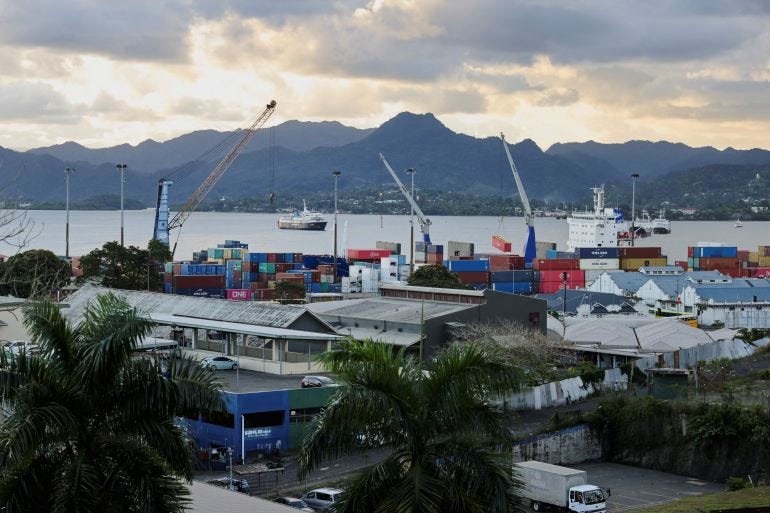
The Quad’s first joint infrastructure project, a port in Fiji, was announced with critical minerals and energy security initiatives targeting the rare earths gap China created when it halted shipments to Japan. The port is a modest investment by itself, but it represents a shift in the coalition from talk to action. The fact that these initiatives were announced at the same time signals that the Quad is building toward an integrated approach rather than treating each vulnerability separately.
Each member brings something the others need. Australia has mining reserves. India has industrial scale and labor. Japan has capital and engineering. The United States has technology, demand from a surging domestic energy buildout, and a government increasingly prepared to back domestic mining and processing. No single member can build a supply chain that competes with China’s alone. Together, the four cover most of what that supply chain requires.
The Model the Current Moment Requires
The Biden framework asked allies to organize around ideology, democracies versus autocracies, and required partners to accept costs in service of ideals many did not fully share. The result was uneven cooperation. The Quad minerals framework asks something different. Supply chain security benefits, and no one is subsidizing American preferences. The framework is transactional, interest-based, and durable because the incentives are aligned.
The Hormuz shock gave every Quad member a vivid demonstration of what dependency costs when a crisis arrives. The question now is whether Washington treats this as an opportunity to build a new and durable multilateral architecture or pursues it deal by deal. The framework exists. Right now there is still an opportunity to counter China’s dominance over a critical industry. This won’t be true forever, and cooperation is the key to seizing this opportunity.