


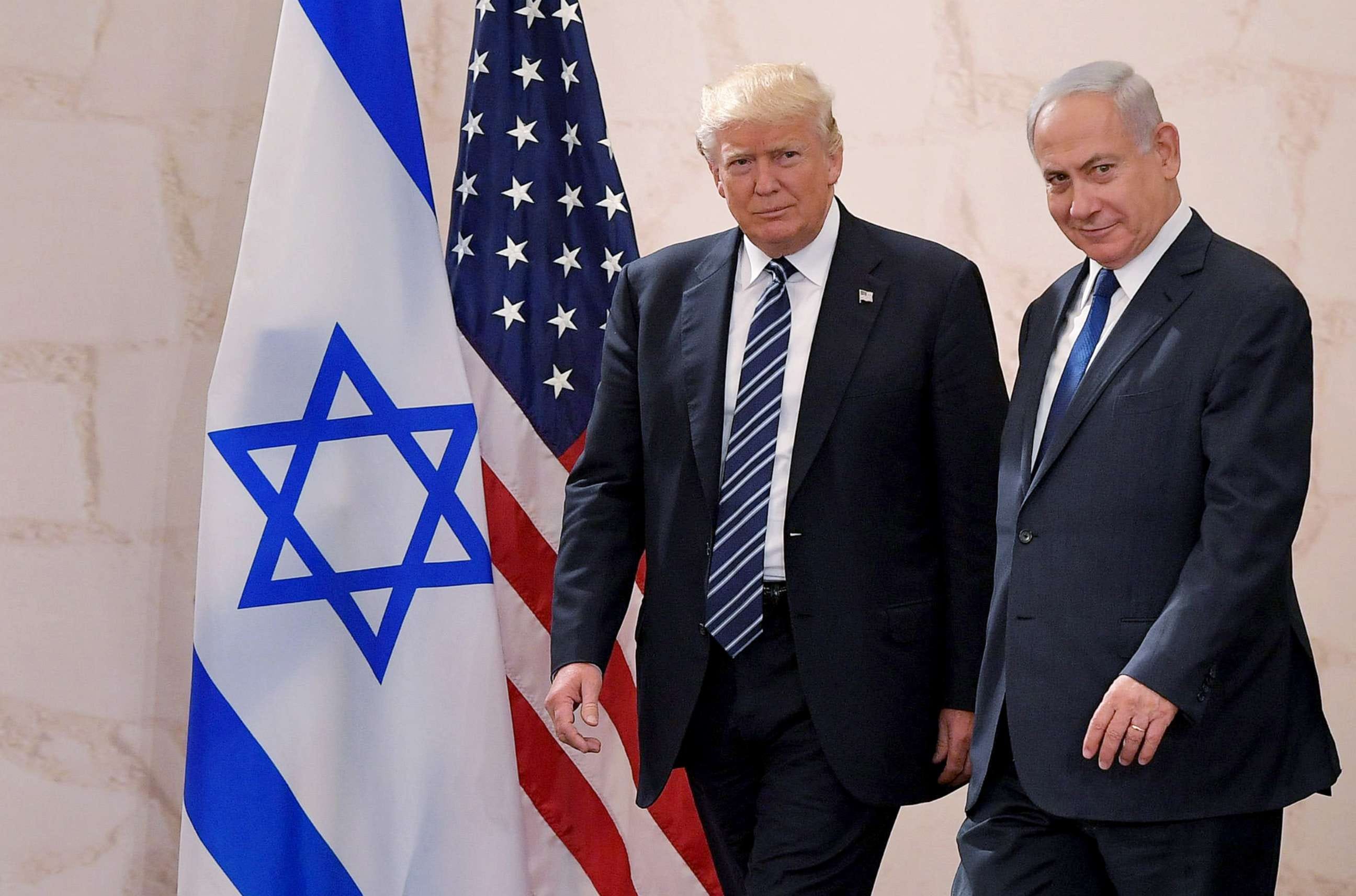
The U.S.–Israel relationship has always been a blend of warmth and tension. The latest clash, culminating in Donald Trump’s warning that Israel must not annex parts of the occupied West Bank, seems at odds with his reputation as a loyal ally of Israel. Yet it fits a century-old pattern: American presidents publicly embrace Israel while privately setting limits. Beneath every declaration of friendship lies a long tradition of strategic restraint.
This tension began decades before Israel existed as a modern state. When the Ottoman Empire collapsed at the end of World War I, Britain seized control of Palestine under a League of Nations mandate. In 1917, British Foreign Secretary Arthur Balfour issued the famous Balfour Declaration supporting “the establishment in Palestine of a national home for the Jewish people.”
It also insisted that “nothing shall be done which may prejudice the civil and religious rights of existing non-Jewish communities.” It was an attempt to satisfy both aspirations for a Jewish state (or “Zionism”) in Palestine and imperial management of the Middle East, and it handed Washington a delicate question it would wrestle with for the next hundred years.
President Woodrow Wilson, inspired by self-determination but cautious about colonial entanglements, endorsed the Balfour Declaration soon after it was issued (history.state.gov). His support was moral, not strategic. The United States had no formal role in the region and the territory was under U.K. administration.
In 1922, Congress passed a joint resolution formally endorsing the goal of a Jewish homeland in Palestine but stopped short of calling for statehood. Presidents Harding, Coolidge, and Hoover maintained this as the official policy. They saw the Zionist project as a moral cause yet feared alienating Arab leaders and jeopardizing access to oil, which had become a vital U.S. resource after World War I with widespread adoption of automobiles.
Franklin Roosevelt faced the same dilemma on a larger scale. As the Nazi regime targeted Europe’s Jews, the U.S. accepted only limited numbers of refugees, and sympathy for Zionism grew. Roosevelt affirmed “active American support for the Jewish National Home in Palestine.”
But, his State Department warned that endorsing statehood could destabilize the region and threaten relations with Arab allies. The oil diplomacy of the 1930s, especially America’s partnership with Saudi Arabia, made the Middle East too important to offend. Roosevelt thus maintained the formula: humanitarian sympathy without political commitment.
A Constitutional Crisis in Israel

Protests are raging across Israel as over half a million protestors (roughly 5% of the nation’s population) gathered on Saturday night to decry the prime minister’s plan to overhaul the judiciary. It is the biggest protest in Israel’s history.
Everything changed in 1948. When Britain gave up its mandate and withdrew from Palestine, Jewish leaders declared the establishment of the State of Israel. President Truman recognized the new government immediately over fierce objections from his advisers, who warned that recognition would alienate Arab states, inflame regional tensions, and threaten Western access to petroleum.
But Truman, moved by the Holocaust and by moral conviction, insisted that the Jewish people deserved self-determination. He also understood the political momentum of Zionism at home. Recognition of Israel was both a moral statement and a political calculation. After Israel beat back the surrounding Arab states, who attacked the new state simultaneously, independence was assured.
That duality of conviction and caution defined every presidency that followed. Dwight Eisenhower, publicly a friend, privately fumed when Israel joined Britain and France in attacking Egypt during the 1956 Suez Crisis. He pressured Israel to withdraw from the Sinai Peninsula and declared that Europe would not dictate the region’s future.
John F. Kennedy, alarmed by reports that Israel was building a nuclear reactor, pressured Prime Minister David Ben-Gurion to accept U.S. inspections. Lyndon B. Johnson tilted decisively toward Israel after the 1967 Six-Day War, when Israel captured the West Bank, Gaza, the Golan Heights, and Sinai from a coalition of Egypt, Jordan, and Syria. But he quietly warned that permanent occupation would invite endless conflict.
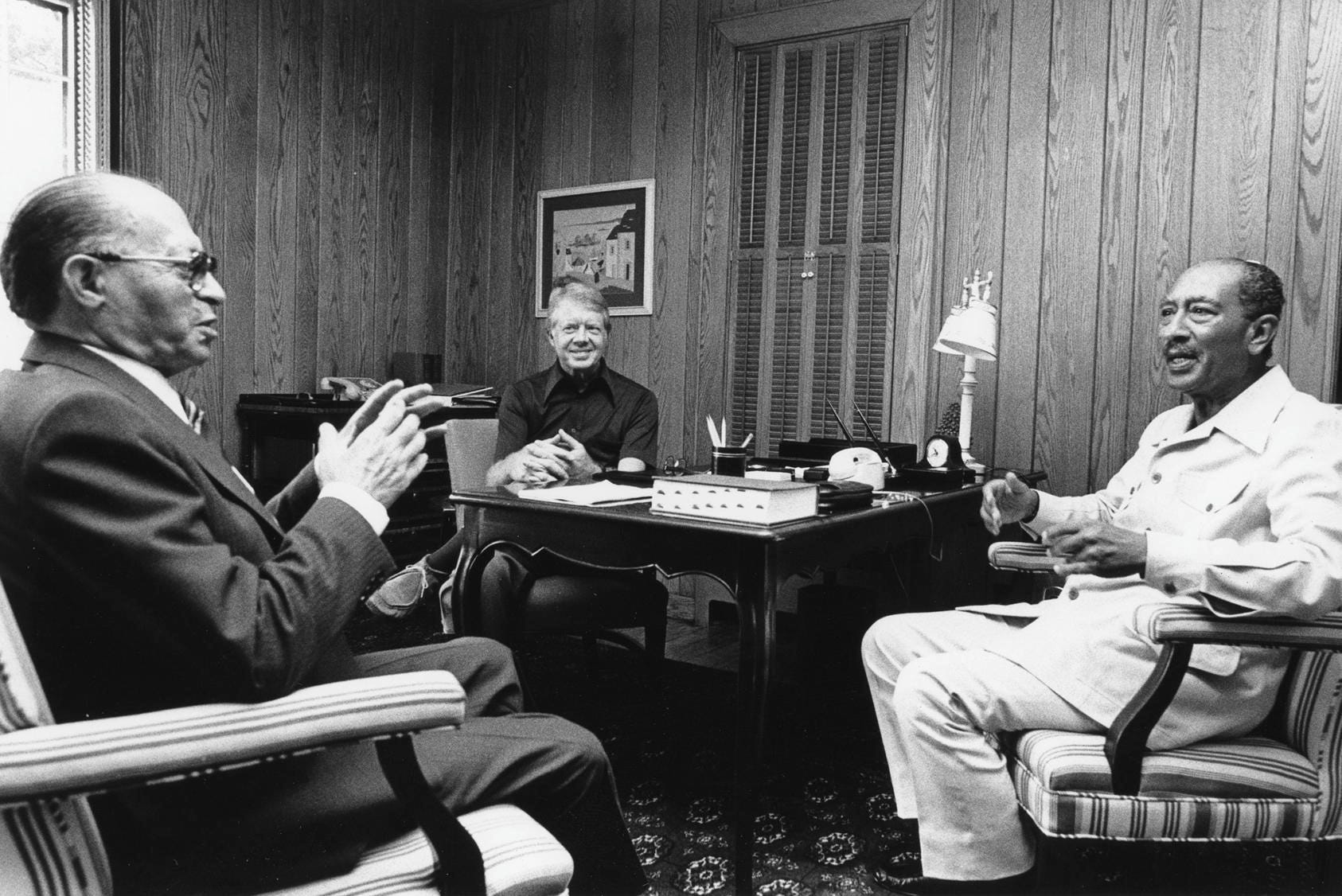
The 1970s and 1980s brought alternating warmth and strain. Jimmy Carter brokered the 1978 Camp David Accords between Egypt and Israel, securing the first peace treaty between Israel and an Arab state. Egypt regained the Sinai, but Palestinians were left with vague promises of autonomy, and much of the Arab world condemned the deal as a betrayal.
George H. W. Bush later confronted Israel over settlement construction, delaying $10 billion in loan guarantees until the Israelis agreed to attend a 1991 peace conference with Palestinians and Arab states. Bill Clinton’s 1993 Oslo Accords formalized limited Palestinian self-rule in the West Bank and Gaza but fragmented the territory meant for a future Palestinian state and failed to halt the expansion of Jewish settlements.
Even the friendliest administrations found their limits. George W. Bush encouraged Israel to evacuate the Gaza Strip and allow democratic elections, only for Hamas to prevail in 2007. Donald Trump, who moved the U.S. Embassy to Jerusalem and brokered the Abraham Accords between Israel and several Arab states, seemed to represent unconditional support. Yet even he has now reached the familiar breaking point.
The spark came this fall. On September 25, 2025, Trump told reporters, “I will not allow Israel to annex the West Bank. It’s not going to happen” (Reuters). The statement followed months of Israeli debate over a bill to extend Israeli sovereignty to settlements in the occupied territories. When the Knesset (Israel’s parliament) advanced the measure in October, the U.S. administration delivered an unusually sharp response.
Secretary of State Marco Rubio warned that annexation “endangers the Gaza plan,” referring to Washington’s proposal for a multinational peacekeeping and reconstruction effort (Reuters). Vice President J.D. Vance called the bill “a very stupid political stunt” and “an insult” to U.S. diplomacy (AP News). Trump himself warned that annexation would end U.S. support for Israel (Arab News).
For a president who once campaigned on absolute loyalty to Israel, the reversal was striking. Yet Trump’s motivations echo those of his predecessors. Annexation threatens to derail U.S. efforts to stabilize Gaza, repair ties with Arab partners, and maintain the fragile normalization agreements his administration brokered.
Saudi Arabia’s foreign minister publicly praised Trump for “understanding very well” the dangers of annexation (Reuters). In other words, Trump’s pro-Israel instincts now collide with the same regional dynamics that constrained past presidents. For all the talk of a “special relationship,” Washington’s support for Israel has never been unconditional.
It is anchored in shared values and deep military cooperation, but bounded by strategy. The U.S. needs Israel strong enough to deter its enemies but not so assertive that it disrupts the broader regional order. This balance of affection in public frustration in private has endured for a century.
Every president eventually rediscovers the same reality. America’s bond with Israel is powerful but pragmatic, rooted as much in limits as in loyalty. The argument between Trump and Netanyahu today is only the newest chapter in a story that began when Britain took Palestine from the Ottomans and handed the world a problem that has never truly been resolved.