


Juneteenth celebrates a very specific moment in American history. It was not the final end of slavery, that would come six months later on December 6th, 1865 with the passage of the 13th ammendment. It was more a symbolic victory, commemorating the final enforcement of the Emancipation Proclamation when Union General Gordon Granger landed at Galveston and took command of Union forces to begin the Reconstruction-era military occupation of Texas.
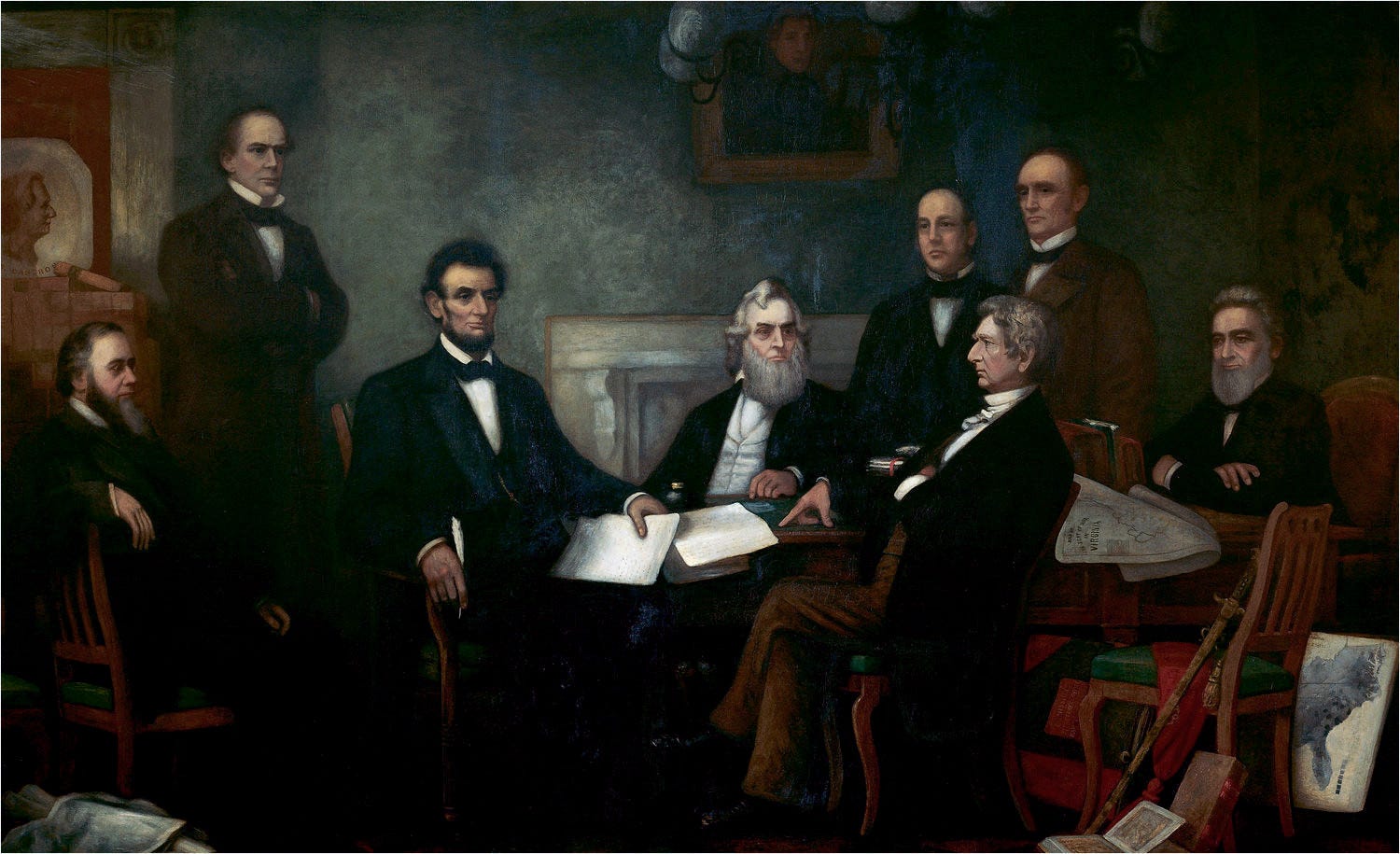
The Proclamation
Abraham Lincoln issued the Emancipation Proclamation on January 1, 1863 under his constitutional authority as commander in chief during the Civil War. The text described the order as “a fit and necessary war measure for suppressing said rebellion.” The legal basis was military necessity. The document declared that all persons held as slaves in states in rebellion against the United States “are, and henceforward shall be free.” The Proclamation was a military instrument issued by a wartime president, not an act of Congress or a constitutional amendment.
The Proclamation’s scope was limited by design to withstand legal challenges. It applied only to Confederate states in active rebellion and exempted border states that remained loyal to the Union. It also exempted Confederate territory already under Union military control. The freedom it promised depended entirely on Union military victory. If the war ended or a federal court struck the order down, the constitutional authority disappeared with it. Lincoln understood this. He began pushing for a constitutional amendment to abolish slavery before the war was over.
It also had a diplomatic purpose. Lincoln needed to sure up public opinion in Europe, particularly France and the UK, against formal recognition of the Confederacy. The Proclamation accomplished this by associated the Southern war effort with preserving slavery, which both countries had abolished decades earlier. Despite this, due to reliance of British industry on Southern cotton, blockade runners continued to covertly assist the Confederacy.
The Enforcement Gap
Texas was the most remote theater of the Civil War. Roughly 250,000 people remained enslaved in the state in 1865, and the small number of Union troops present had no capacity to enforce the Proclamation. Some slaveholders withheld the information deliberately. Others benefited from the simple fact that Texas was far from the main theaters of the war, and enforcement was physically impossible until the Confederate military collapsed.
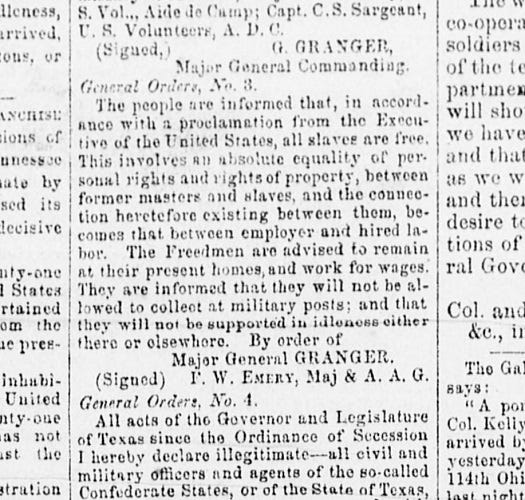
On June 19, 1865, Major General Gordon Granger arrived in Galveston with approximately 2,000 federal troops and issued General Order No. 3. The order declared all enslaved people in Texas free and used language that went beyond the Proclamation: it announced “an absolute equality of personal rights and rights of property between former masters and slaves.” The date was two years, five months, and eighteen days after Lincoln signed the Emancipation Proclamation.
Granger was not the first federal presence in Galveston that month. Two weeks earlier, a brigade of Black soldiers from the 25th Army Corps had captured the city, chased the remnants of the Confederate government into Mexico, and begun spreading word of emancipation. Civil War historians estimate that thousands of enslaved people escaped to freedom because of the 25th Army Corps before Granger arrived to make the announcement official.
The 13th Amendment
Lincoln knew the Proclamation could not survive as permanent law. A war measure issued under the commander in chief’s military authority would end once the war ended. The only path to permanent abolition was a constitutional amendment. Lincoln intervened directly (and controversially) in the legislative process to pass the 13th Amendment.
The Senate passed the amendment on April 8, 1864. A party-line vote in the House fell short of the required two-thirds majority. Lincoln made the amendment a central plank of the 1864 Republican platform and pushed it through the House on January 31, 1865. He signed the joint resolution on February 1. He was assassinated on April 14. The amendment was ratified on December 6, 1865, five months after Juneteenth and eight months after Lincoln’s death.
Juneteenth sits between the temporary war measure and the constitutional settlement, on the day federal troops arrived in Texas to enforce what the president had declared two and a half years earlier. The delay in communications and travel meant it was enforced two months after the Confederacy had surrendered.
“Neither slavery nor involuntary servitude, except as a punishment for crime whereof the party shall have been duly convicted, shall exist within the United States, or any place subject to their jurisdiction.” (U.S. Const. amend. XIII, § 1)
The Founding Idea
On of the core ideas of Lincoln’s political philosophy, as I discussed in my previous piece, was that the Constitution could not be properly read apart from the Declaration of Independence. The claim that all people are created equal was the Founding idea, and the Constitution existed to protect it. The Emancipation Proclamation was an explicit executive attempt to make that idea operative against slavery in the states where it persisted. Juneteenth is the date the enforcement arrived in the last holdout.
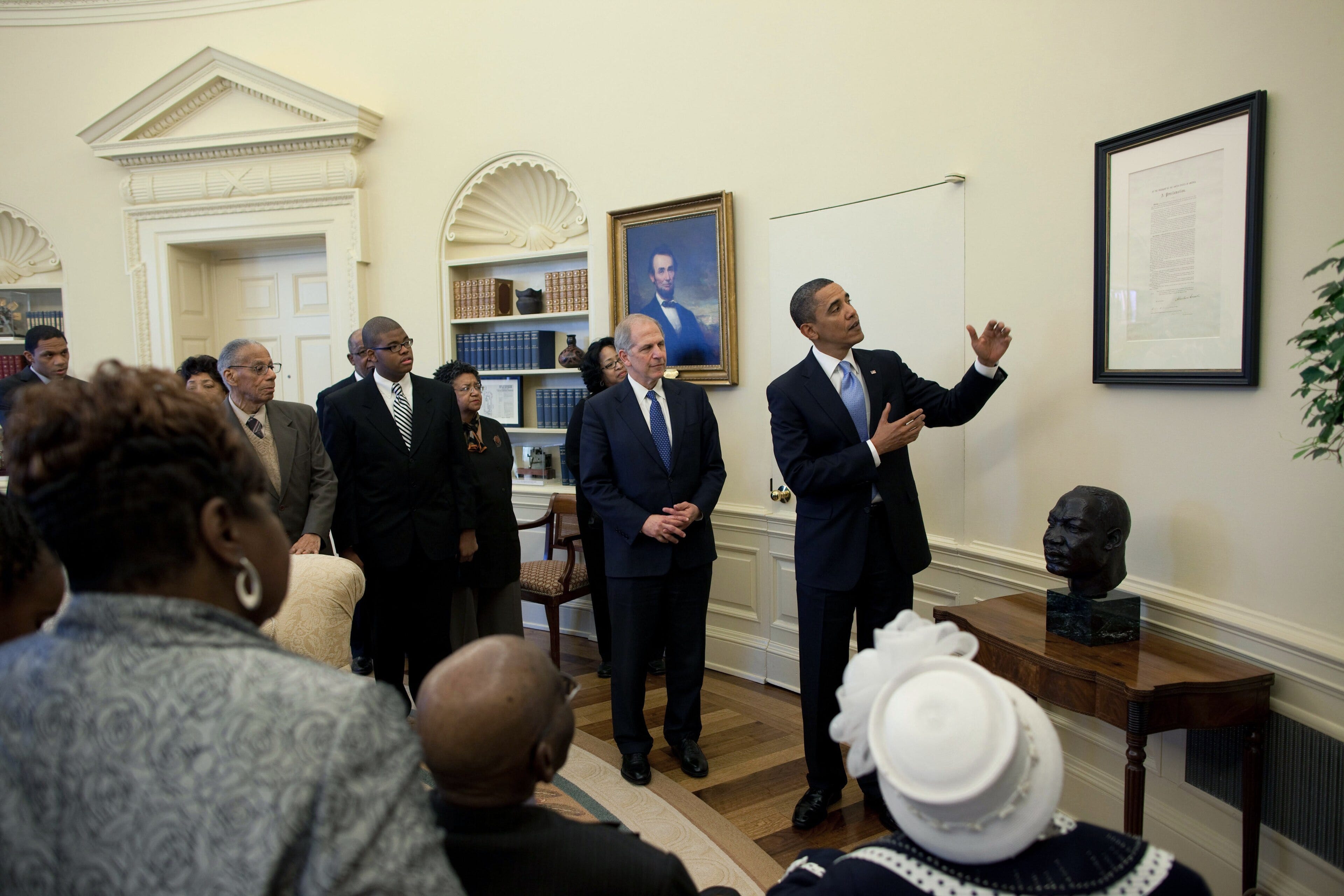
The Obama Presidential Center was dedicated in Chicago on June 18, 2026, and opened to the public the following day, on Juneteenth. The center’s exhibits begin with a print of the Declaration of Independence, Lincoln’s Bible, and a pen and ink stand used by Frederick Douglass, himself a former slave. Obama’s dedication speech described the center as built around “the shared values that make democracy possible,” including the belief in “the intrinsic dignity and worth of all people.”
Obama called these values American, not the property of any party, and named them as principles every former president at the ceremony had tried to uphold. The civic religion Lincoln articulated required a war, a constitutional amendment, and federal occuption of the South to become operative. It’s fitting that the library of our first African-American president is in Illinois, the Land of Lincoln.